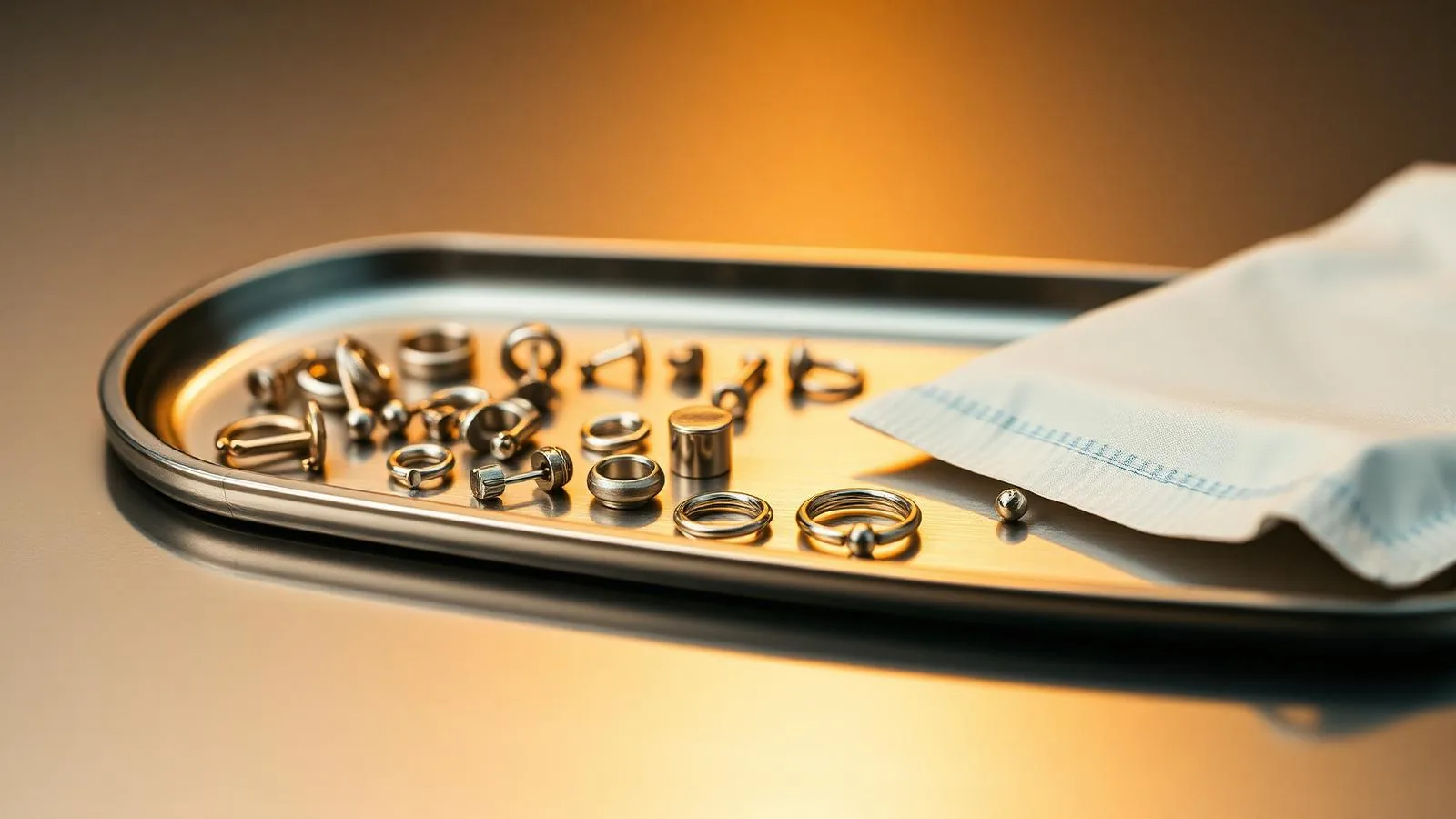
Sterile needle ear piercing in Hauz Khas Village, New Delhi — lobe, helix, tragus, daith, conch and rook — with implant-grade jewellery and expert aftercare.
Ear piercing in Hauz Khas, done the professional way
Inkspace is a dedicated tattoo and piercing studio in Hauz Khas Village, tucked inside Space Gully in New Delhi. Our ear piercing service is built around three non-negotiables: sterile single-use needles, implant-grade jewellery, and an artist who actually places the piercing where it belongs on your ear — not where a template says it should go. Whether you are walking in for a simple lobe piercing or planning a curated ear with helix, tragus and conch work, the same hygiene standard and the same hand-marked placement apply.
Most clients find us by searching for an ear piercing studio in Hauz Khas, but a large share of our regulars travel from across South Delhi, Gurgaon and Noida specifically because we use needles, not guns, and because we stock jewellery that a fresh piercing can actually heal around.
Types of ear piercings we offer
Every ear is shaped differently, and not every placement that looks good on a reference photo will sit well on your anatomy. During your consultation we will tell you honestly which placements your ear can support and which it cannot.
- Ear lobe piercing — the classic first piercing, suitable from age 7 with parental consent. Heals fast and pairs well with most jewellery styles.
- Upper lobe piercing — a second or third lobe placement, often stacked for a curated lower-ear look.
- Helix piercing — placed on the upper outer cartilage. One of the most requested cartilage piercings in Delhi and a strong foundation for a curated ear.
- Forward helix piercing — sits on the cartilage ridge above the tragus. Looks delicate with a single stud or stacked in twos and threes.
- Tragus piercing — through the small cartilage flap in front of the ear canal. Heals tighter than a helix and pairs well with small flat-back labrets.
- Conch piercing — through the large inner cartilage bowl. Looks bold with a hoop and minimal with a stud.
- Daith piercing — through the inner cartilage fold. Often chosen for the aesthetic of a small hoop sitting snug inside the ear.
- Rook piercing — through the inner upper cartilage ridge. Requires the right anatomy; we will check before booking.
- Industrial piercing — two helix piercings connected by a single straight barbell. A more advanced placement that demands precise angle work.
How the ear piercing process works at Inkspace
We follow the same sequence for every client, from a first lobe piercing to a multi-point curated ear.
- Consultation. We look at your ear, talk through the placement you want, and tell you what is and is not anatomically possible. If you are considering multiple piercings, we plan the order and the spacing now rather than mid-session.
- Placement marking. Every piercing is hand-marked with a sterile surgical marker. You see the dot in a mirror and approve it before any needle comes out of its pouch.
- Sterile single-use needle procedure. We use pre-sterilised, individually packaged hollow needles, opened in front of you. Each needle is used once and disposed of in a sharps container immediately after.
- Jewellery insertion. Your chosen implant-grade piece is inserted through the channel created by the needle. For fresh cartilage piercings we fit a slightly longer post to accommodate swelling, then downsize once healing has started.
- Hygiene protocol. Gloves are changed at every transition, the work area is wiped with hospital-grade disinfectant between clients, and all reusable tools are autoclave-sterilised. Disposable items stay disposable.
Needle vs gun piercing: why professional studios use needles
If a place pierces ears with a spring-loaded gun, walk out. We are direct about this because it matters.
- Sterility. Piercing guns cannot be fully autoclaved. The plastic housing that touches your ear is wiped down between clients, not sterilised.
- Tissue trauma. A gun forces a blunt stud through cartilage and lobe tissue using pressure. A hollow needle removes a clean channel of tissue, which heals faster and with less scarring.
- Placement control. A gun locks you into the spots its template allows. A needle and a steady hand let us mark exactly where your ear will sit best.
- Jewellery quality. Gun studs are usually low-grade alloy with a butterfly back that traps fluid against a healing wound. Implant-grade flat-back labrets, which we use, do not.
For cartilage piercings — helix, tragus, conch, daith, rook, industrial — using a gun is genuinely unsafe. We will not do it.
Jewellery materials we use
Fresh piercings are open wounds. The metal you put in them decides how well they heal.
- Implant-grade titanium (ASTM F-136). Our default for all fresh piercings. Nickel-free, lightweight, and the safest option for sensitive skin.
- Surgical stainless steel (316L / 316LVM). Suitable for healed piercings and clients with no known nickel sensitivity.
- Hypoallergenic options. If you have reacted to jewellery before, tell us. We default to titanium in those cases at no extra cost.
- Suitable jewellery for fresh piercings. Flat-back labrets for cartilage and lobes, lightweight studs, internally threaded ends. No butterfly backs, no plated metal, no costume jewellery for at least the first three to six months.
You can change to gold, opal, or decorative pieces from your own collection once the piercing is fully healed and we have confirmed it.
Realistic healing times
Healing is biology, not marketing. These are honest ranges based on what we see in our clients, not the shortest number we can quote.
- Lobe — 6 to 8 weeks for surface healing, around 3 months fully.
- Helix — 6 to 9 months on average, sometimes up to 12.
- Tragus — 6 to 9 months. Tight cartilage, slow but predictable.
- Conch — 6 to 9 months for a stud, longer with a hoop.
- Daith — 6 to 9 months, sometimes longer if irritated by headphones.
- Industrial — 9 to 12 months. Two cartilage points sharing one bar means healing is only as fast as the slower side.
Do not change jewellery before the piercing is healed. We offer downsizes and change-outs once the swelling has fully settled.
Ear piercing aftercare
Aftercare is simple, and simple is the point. The more you fuss with a piercing, the longer it takes to heal.
- Cleaning routine. Twice daily, no more. Wash hands first.
- Saline care. Use a sterile saline spray (0.9% sodium chloride) or a clean cotton pad soaked in saline. Gentle, no scrubbing, no twisting the jewellery.
- Sleeping precautions. Avoid sleeping on the pierced side for the first 2–3 months. A travel pillow with a hole in the centre helps for ear piercings.
- Swimming restrictions. No pools, hot tubs, sea or river water for the first 8 weeks minimum. Shower water is fine.
- Irritation vs infection. Mild redness, clear or pale yellow crust, and tenderness for the first few weeks are normal. Hot, throbbing pain, thick green or grey discharge, spreading redness or fever are not — come back in or see a doctor.
For a deeper aftercare walkthrough that applies to all piercings, see our piercing in Hauz Khas page.
Why clients choose Inkspace for ear piercing
- Hauz Khas Village location. Easy to reach from anywhere in South Delhi, with Space Gully tucked away from the main lane noise.
- Professional hygiene standards. Autoclave-sterilised tools, single-use needles, hospital-grade surface protocols.
- Experienced artists. Our piercers work on cartilage every day, not occasionally. Curated ears, industrials and tight tragus placements are routine work for us.
- Walk-ins and appointments. Walk-ins welcome during studio hours; appointments recommended for curated ears or multi-point sessions.
- Quality jewellery options. Implant-grade titanium fitted as standard, with surgical steel and decorative pieces available for healed piercings.
Standard piercings are ₹800 and advanced placements are ₹1,200. Jewellery is priced separately based on the piece you choose.