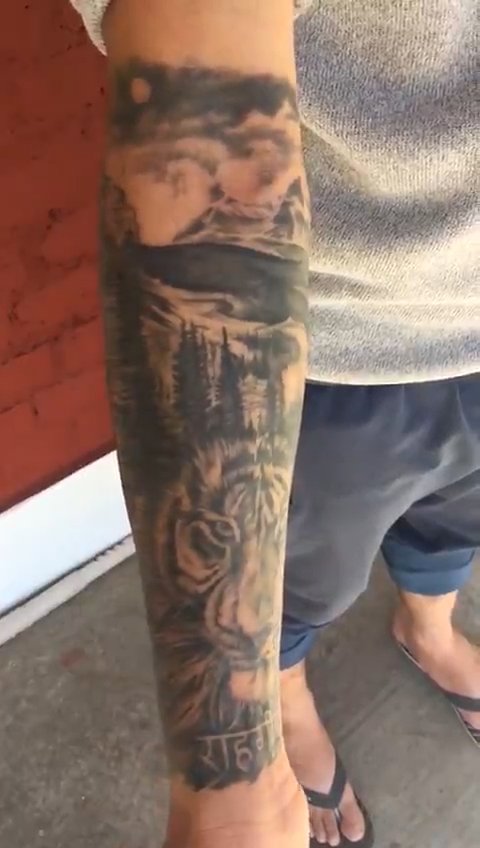
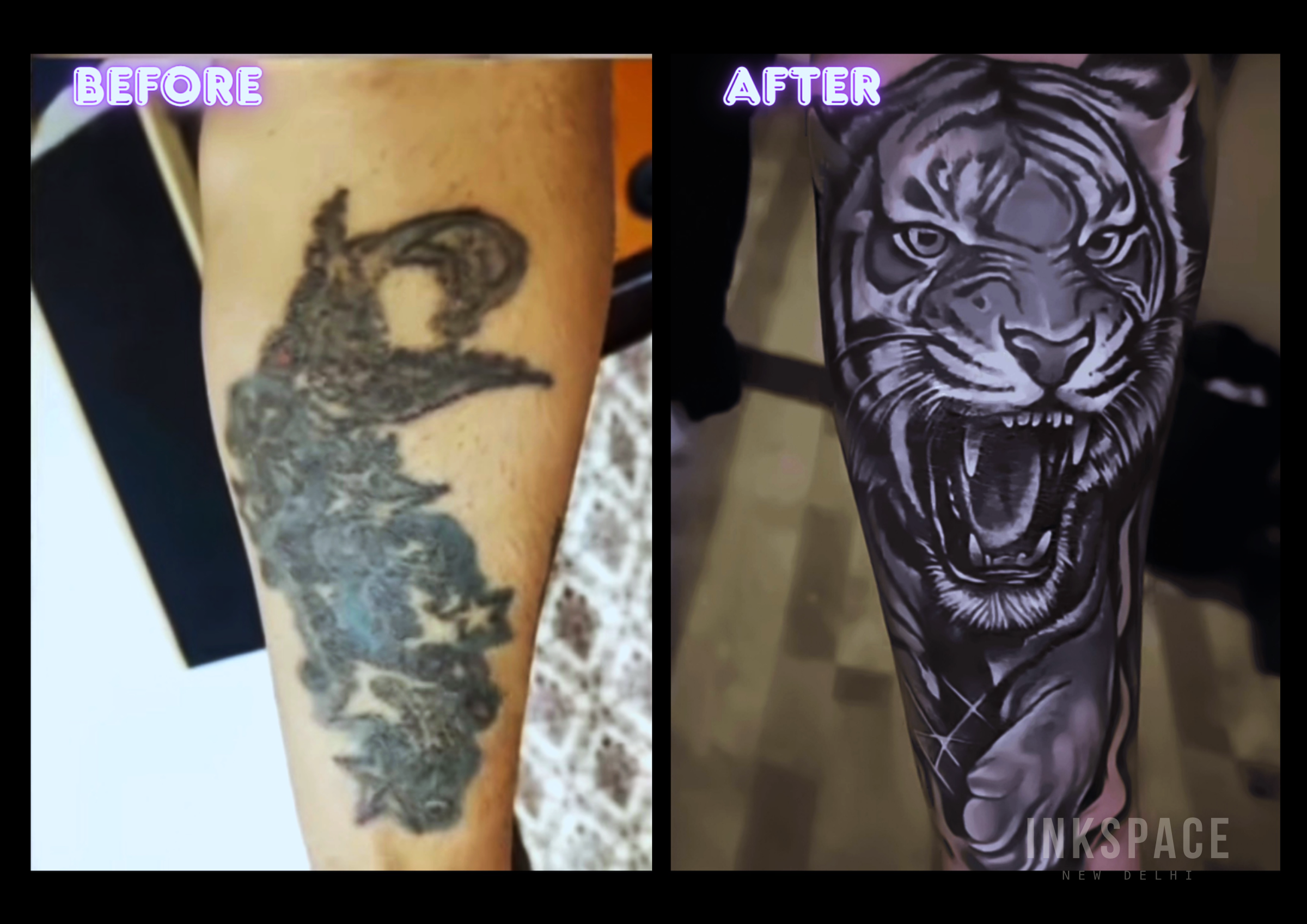
The client came in with a significantly dark, older tattoo that had some existing scar tissue. The goal here was to completely bury that old work while delivering a dynamic new piece they could be proud of, focusing on a strong, imposing image.
- Why this design
- We opted for this roaring tiger to effectively camouflage the old tattoo's density and shape. The open jaw and fur textures allowed us to integrate high contrast and deep blacks directly over the existing dark areas, using the new design's silhouette to absorb the old mass rather than fight it. A different approach, like a lighter subject, would have been high risk for bleed-through.
- Placement notes
- Given the original tattoo's location, the tiger's head fit naturally, allowing its contours to follow the underlying musculature without distortion upon movement. This area also tends to age predictably, supporting the long-term integrity of the detail.
- Technical challenges
- The strategy involved multiple passes of concentrated black and dark grey packing, effectively hyper-saturating the areas where the old tattoo was densest. We used a tight grouping of magnums for smooth transitions and maximum pigment deposit, ensuring that the new, intentionally dark values would definitively eclipse the underlying ink. Contrast was key, pushing the brightest highlights against those deep blacks to maintain readability post-healing.
- Style observations
- Realism, especially when executed with a strong black and grey palette and adequate saturation as we've done here, holds up quite well over time. The careful use of solid blacks and varied grey washes ensures definition persists, though some softening of extreme detail is natural over 5–10 years. For a cover-up like this, that deep saturation is also critical for longevity against the old ink.
Learn MoreFAQ · AI · TECH · PLACEMENT · STYLE +
FAQ
Can a tattoo like this fully cover an existing tattoo?
Most cover-ups are possible when the new design is denser and darker than the original. Pieces like this one use heavy black areas and considered linework so the old tattoo disappears under the new composition. We confirm feasibility in consultation by reviewing photos of the existing tattoo.
Was laser removal needed before this cover-up?
Some cover-ups need 2–4 laser sessions first to lighten the existing tattoo; many do not. The decision depends on how dark and saturated the original is. We tell you up front in your consultation whether laser is required.
How long does realism stay sharp?
Realism relies on soft gradients and tonal layering, so it ages differently from bold styles — fine highlights soften first. A well-executed realism tattoo stays visually strong for 8–15 years; we recommend an optional touch-up around year 7–10 to keep contrast.
Is the bicep a painful spot for a tattoo?
Pain varies person to person, but the bicep is generally considered a moderate placement on the standard pain scale. Most clients describe the sensation as manageable in two to three hour blocks; longer sessions are broken with short resets.
Anything special about healing a tattoo on the bicep?
Healing in this area benefits from loose, breathable clothing for the first two weeks, no submerged water (pools, bathtubs), and avoiding direct sun. We send a written aftercare plan after every appointment and stay on WhatsApp through your healing window.
How do I book a realism tattoo with Chetan Salhotra?
Tap "Book Similar Tattoo" above — the form is pre-filled with the realism style and Chetan Salhotra so we can quote and schedule fast. We confirm on WhatsApp the same day in most cases.