Most people start their first tattoo by searching for a picture. That might be the biggest mistake they can make.
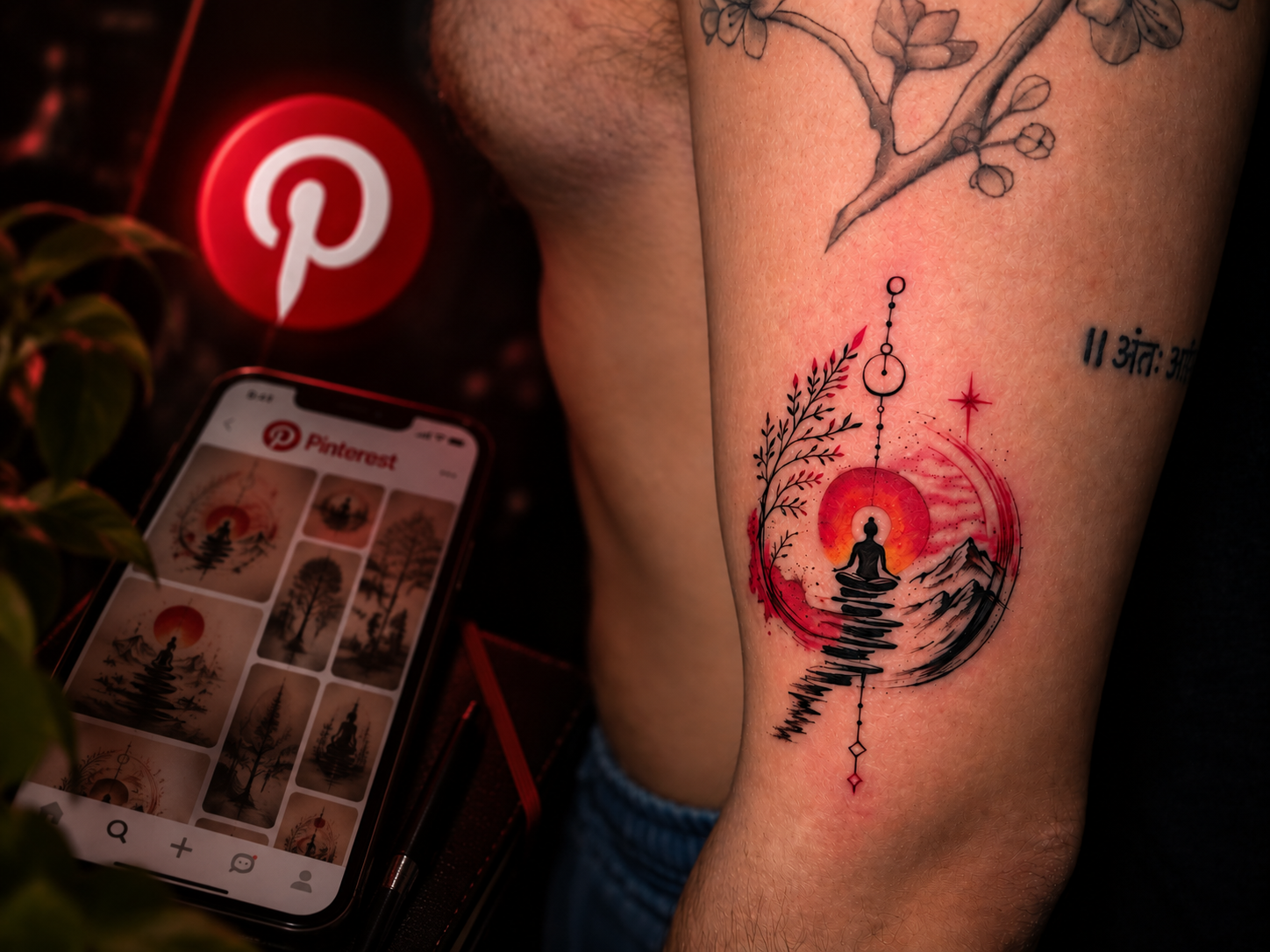
You open Instagram. You open Pinterest. You type “first tattoo ideas” into a search bar and suddenly you’re swimming in thousands of images — fine-line florals, tiny symbols, bold blackwork, matching couples’ designs, and endless variations of the same popular motifs. An hour later you have twenty screenshots and no clearer idea of what you actually want.
The problem isn’t the images. The problem is starting with the image. A tattoo is permanent. A reference photo is not. When you begin with a finished design, you skip the most important part of the process: understanding the decision behind it. Why do you want a tattoo at all? What should it mean to you five or ten years from now? How will it live on your body, in your work, and in your daily life?
This article is for anyone considering their first tattoo who feels overwhelmed by options. You don’t need to arrive at the studio knowing exactly what the tattoo should look like. You need to arrive knowing why you want one.
Start With the Meaning, Not the Image
Before you save another screenshot, stop and ask a quieter question: what is this tattoo actually for?
Some people want a mark of a chapter that just ended — a relationship, a move, a recovery, a loss. Others want a quiet reminder of a value they intend to live by. Some simply want something beautiful that feels like theirs. All of those reasons are valid. The difference is that when you start with the reason, the design becomes a translation of something real rather than a decoration you hope will feel meaningful later.
A client once came in with a folder of geometric patterns. After talking for twenty minutes, it became clear the real drive was a sense of structure she had rebuilt after a chaotic few years. The geometry still made sense — but now it was chosen because it represented order and clarity, not because it looked good on a mood board. That conversation changed the scale, the placement, and the density of the final piece.
Meaning does not have to be dramatic. It can be quiet. It can be private. It can even be “I simply like the way this will look on me.” The point is to know it consciously before you lock in a design.
The 5 Questions You Should Answer Before Choosing a Design
These questions are not a test. They are a filter. Answer them honestly and the right design becomes much easier to recognise.
1. Why do I want a tattoo at all?
Is this about identity, memory, aesthetics, rebellion, belonging, or simply curiosity? There is no wrong answer, but a vague “I just want one” often leads to a design chosen under social pressure rather than personal conviction.
2. What feeling or idea should this tattoo carry for me?
Protection, freedom, resilience, softness, strength, humour, remembrance — whatever it is, try to name it in plain language. When you can describe the feeling, an artist can help translate it into form, line, and placement.
3. How visible do I want this to be in my daily life?
A tattoo on the outer forearm is part of almost every conversation. A piece on the upper thigh or ribcage is private by default. Visibility is not just about other people’s opinions — it is about how often you yourself will see it and how that daily presence feels.
4. How does this fit the life I actually live?
Consider your work environment, the clothes you wear most days, the sports or activities you do, and how your skin ages in that area. A design that looks perfect on a young, smooth surface may behave differently on a joint that moves constantly or on skin that sees a lot of sun.
5. Am I choosing this because I love it, or because it is currently popular?
Trends move fast. A design that feels fresh on Instagram today can feel dated in three years. Ask yourself whether you would still want this piece if it stopped appearing in your feed tomorrow.
Where Should Your First Tattoo Go?
Placement is not decoration. It is part of the design.
A small symbol that looks balanced on the wrist can feel lost or awkward when scaled up for the shoulder. A flowing design that works beautifully along the forearm may fight the body’s natural lines on the calf. Anatomy matters. So does movement. A piece that sits across a joint will stretch and shift every time you bend. A piece on a high-friction area may need more maintenance over time.
Workplace considerations are practical, not moral. Some professions still have formal or conservative expectations. If your job requires long sleeves or limited visible ink, that is simply information to work with, not a reason to abandon the idea of a tattoo. Many first tattoos live comfortably under clothing and still feel deeply personal to the wearer.
Pain varies by location. Areas with thin skin or close bone — ribs, ankles, spine, feet — tend to feel more intense. Fleshy areas such as the outer upper arm or thigh are generally more forgiving. Pain tolerance is personal, so treat any ranking of “most painful spots” as a rough guide rather than a rule.
Finally, think about ageing. Skin changes. A design that relies on extremely fine detail in a high-movement area may lose clarity faster than a slightly bolder piece in a more stable location. A good artist will discuss this with you honestly.
Why a Tattoo You Love on Someone Else May Not Work on You
Reference images are useful. Exact copies are often not.
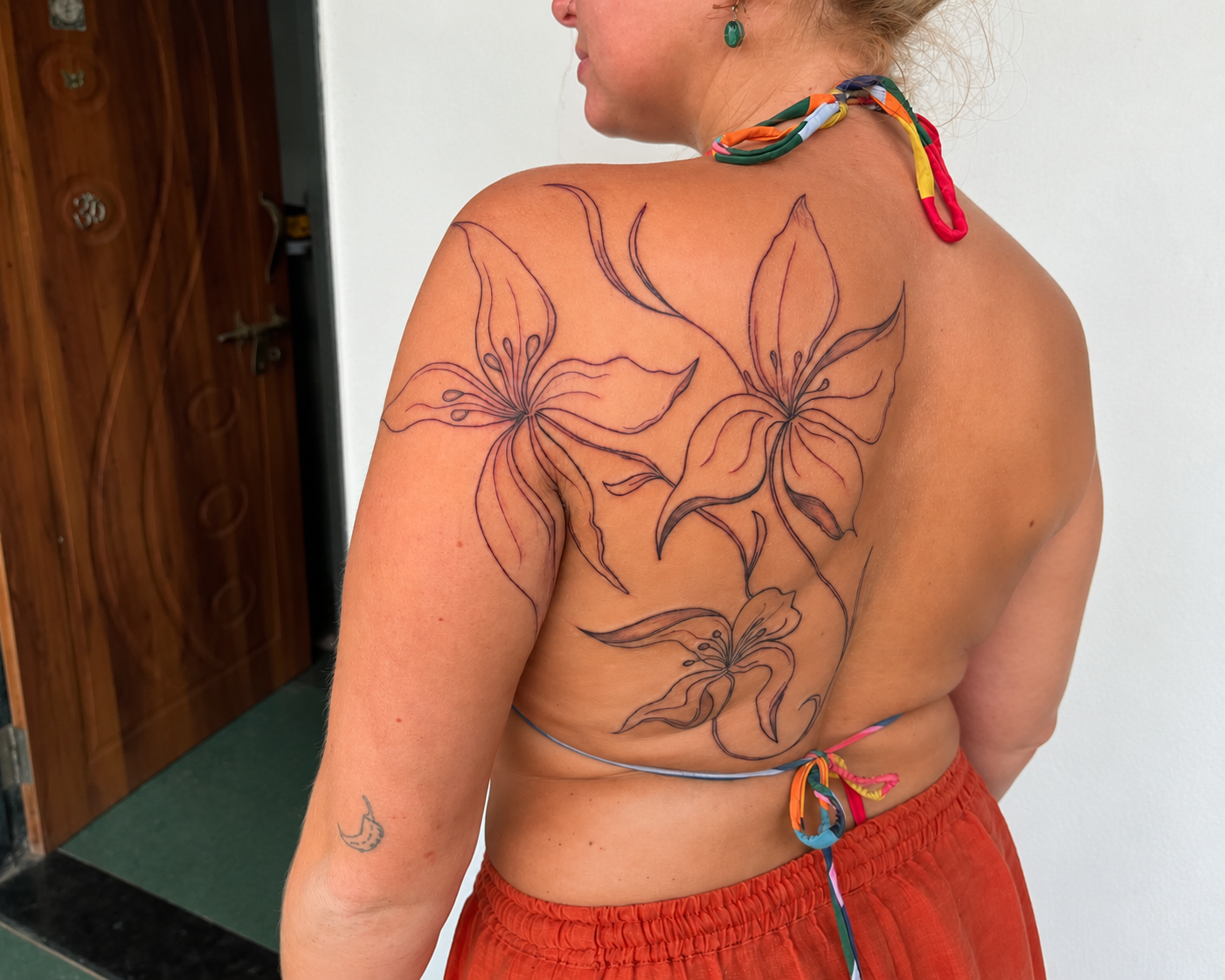
Every body is different. Bone structure, muscle shape, skin tone, skin texture, and the way a person carries themselves all change how a design sits. A piece that looks elegant on a long, narrow forearm can feel cramped or heavy on a shorter, broader arm. A design created for a flat plane may distort when wrapped around a curved surface.
Scale is another common mismatch. Many popular reference images are photographed on a specific body size and then circulated without context. What looks delicate on one person can appear oversized or undersized on another. An experienced artist will adjust proportions so the design belongs to your body rather than fighting it.
Personal style matters too. A highly ornamental, illustrative piece may feel out of place if the rest of your aesthetic is minimal and clean. Conversely, a tiny single-needle symbol may feel incomplete if you prefer bold, graphic work. The goal is coherence with the person wearing it, not perfect replication of a photograph.
Don’t Choose a Tattoo Because It’s Trending
Trends are not the enemy. They introduce people to styles they might never have considered and they push artists to refine techniques. The problem begins when a design is chosen primarily because it is circulating widely right now.
Instagram and Pinterest reward what is currently popular. Algorithms surface the same visual languages repeatedly — fine-line botanicals, micro-realism portraits, specific symbol sets, particular lettering styles. Seeing the same aesthetic everywhere can create a false sense of permanence. In reality, visual trends move in cycles measured in months and years, while a tattoo is measured in decades.
Appreciating a trend is different from committing to it. You can admire a style, collect references from it, and still decide that a quieter or more personal direction suits you better. The question is not “Is this popular?” The question is “Will I still want this when it is no longer popular?”
Some trends age gracefully because they rest on strong fundamentals — good composition, solid technique, thoughtful placement. Others rely heavily on a momentary aesthetic that later feels dated. A conscious decision weighs both the present appeal and the long-term relationship you will have with the piece.
When You Don’t Know What You Want, That’s Actually Okay
Many first-time clients believe they are supposed to walk into the studio with a finished design and a clear placement. That belief creates unnecessary pressure and often leads to rushed choices.
It is completely acceptable to arrive with an emotion, a story, a handful of references that feel directionally right, or simply a preference for a certain visual density or mood. A good tattoo artist is trained to listen, ask clarifying questions, and translate that material into a concept that fits your body and your life.
This does not mean the artist chooses everything for you. The collaboration works best when you bring honesty about what matters to you and the artist brings technical and aesthetic judgement. You remain the author of the decision. The artist helps shape the form.
Some of the strongest first tattoos begin in uncertainty. The client knows the feeling but not the picture. The conversation in the studio becomes the place where the design is discovered rather than imposed. That process takes trust and a little time, but it usually produces work that feels more personal than anything copied from a feed.
Final Takeaway
Your first tattoo does not need to be perfect. It needs to be intentional.
Start with the reason, not the reference. Answer the practical questions about visibility, lifestyle, and longevity. Treat placement as part of the design. Be willing to adapt a reference to your own body and proportions. Resist choosing something only because it is currently popular. And if you do not yet know the exact design, that is not a failure — it is often the beginning of a better conversation.
The first step is not finding the perfect picture. It is understanding the decision behind the tattoo.
Artist Advice
Artist perspective:
“The clients who struggle most with their first tattoo are usually the ones who arrive with a finished design and no story. The ones who do best are the ones who can tell me why they want something on their body. Once I understand the why, the design almost always becomes clearer for both of us.”
Frequently Asked Questions
How do I decide what my first tattoo should be?
Begin with the reason rather than the image. Clarify what the tattoo is meant to represent or mark in your life — a value, a memory, a transition, or simply a desire for something beautiful that feels like yours. Once that is clear, collect references that support the feeling instead of chasing whatever is currently popular. Bring that material to a consultation so an experienced artist can help shape it into a design that fits your body and lifestyle.
What if I like many different tattoo styles?
That is common and not a problem. Different styles can coexist on the same body when they are planned thoughtfully. For a first tattoo, choose the style that best serves the meaning and the placement you have in mind rather than trying to include everything at once. A good artist can also help you see which visual languages will age well together if you plan to add more work later.
Should I choose the tattoo or placement first?
Ideally, consider them together. Placement affects how a design sits, moves, and ages. A design chosen in isolation often needs adjustment once the body and lifestyle are taken into account. Start with the meaning and the practical constraints of your life (visibility, work, movement), then let the design and placement develop side by side.
Is it okay to let a tattoo artist design something for me?
Yes — provided you remain clear about the decision behind the tattoo. Bringing a feeling, a story, or a direction and asking an artist to develop a concept is a normal and often excellent way to work. The artist is translating your intention, not replacing it. The strongest results come from collaboration: you supply the why, the artist helps shape the how.