You don't need to walk into a tattoo studio with a finished design. But you do need to know how to communicate what you're imagining.
Saying, “I want something unique, but not too big, not too small, meaningful but not obvious, and I'll know it when I see it,” might feel clear in your head. To your tattoo artist, it isn't.
The best tattoos aren't created because a client found the perfect reference image. They're created because the artist understood the story, feeling, visual language, placement, and boundaries behind the idea.
So what should you actually tell your artist?
A consultation is not an exam where you are expected to arrive with the correct answer. Your job is to communicate what matters to you. The artist's job is to understand that information and use professional judgement to turn it into something that works as a tattoo.
Start With the Decision, Not the Finished Design
One of the easiest ways to make a tattoo consultation harder than it needs to be is to start by describing the finished picture in your head. Clients often feel that they need to know the exact subject, composition, line weight, size and placement before they sit down with an artist. They don't.
There is a useful difference between saying, “I want this exact tattoo,” and saying, “I like the movement and contrast in these references, but I want the final piece to feel quieter and more personal.” The first gives the artist a fixed image to reproduce. The second gives the artist information they can actually work with.
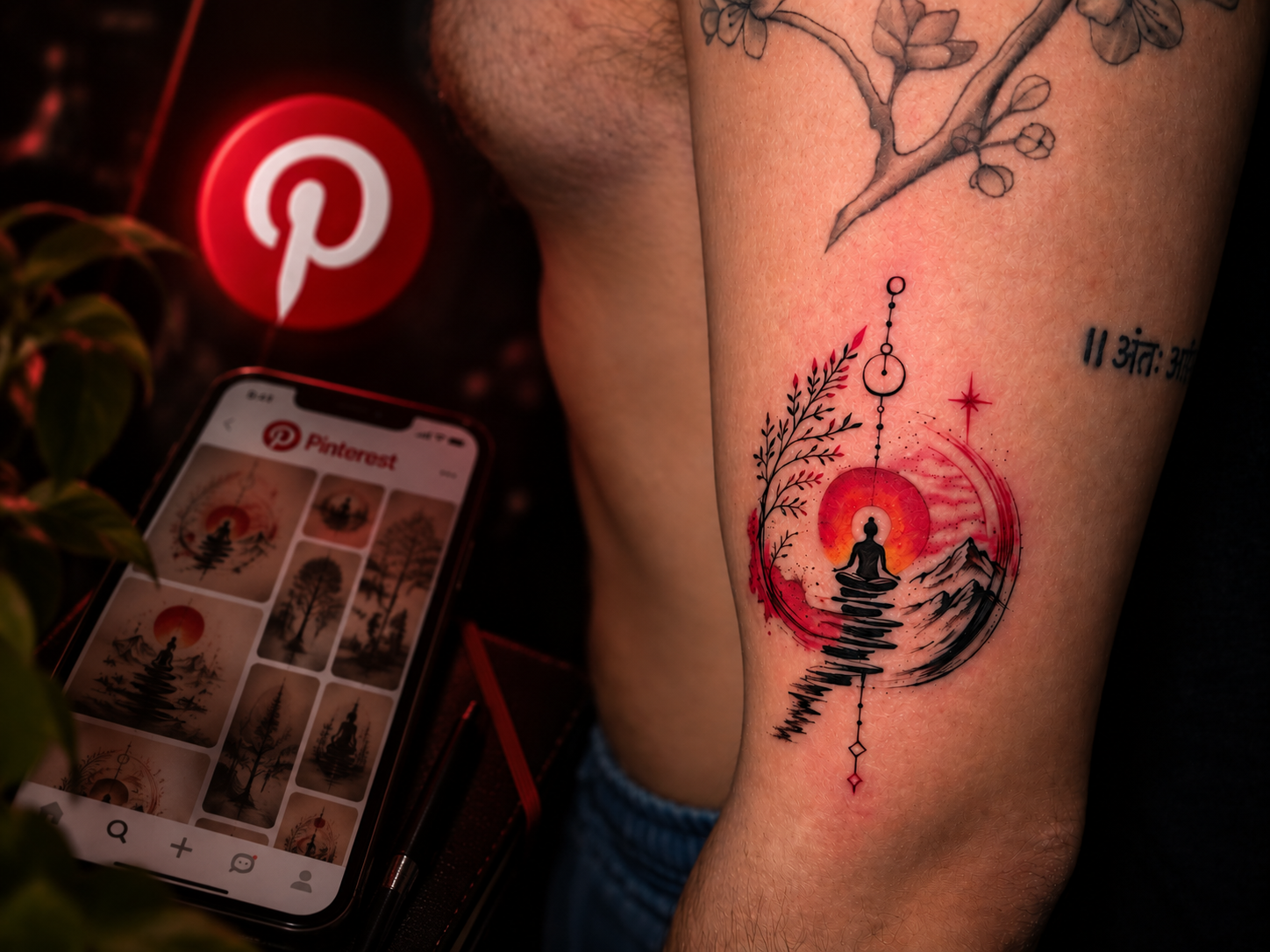
A reference can communicate composition, shading, line quality, scale, mood, subject matter, texture or negative space. Tell your artist which part matters to you. If you have several references, explain the common thread rather than assuming it is obvious.
Maybe you like the softness of one, the composition of another and the way a third follows the body. That information is far more valuable than simply saying that you “like this style.”
Tell Your Artist the Story Behind It
The reason behind a tattoo does not have to be dramatic. It can be a person, a place, a memory, a change in your life, a value you want to remember, or simply an aesthetic you have wanted to wear for years.
What matters is context. If the tattoo represents a difficult period you moved through, the artist may approach the design differently from a tattoo whose purpose is purely visual. If the idea is about
freedom, protection or resilience, those concepts can influence imagery, composition and mood without turning the tattoo into a literal illustration of a word.
You also don't have to disclose anything you consider private. “I want it to feel calm and personal” can be enough. So can “I don't want the meaning to be obvious to someone looking at it.”
The goal is not to give the artist your entire life story. It is to give them enough information to understand what the tattoo needs to communicate.
Show References — But Explain What You Like About Them
Reference images are useful when they are treated as communication tools rather than shopping lists.
Before a consultation, look at each reference and ask yourself what you actually like. Is it the composition? The line quality? The amount of black? The realism? The typography? The way the design follows the body? The mood? The scale?
Tell your artist.
It is also useful to say what you do not like. One reference might have the right subject but the wrong shading. Another might have the right composition but feel too heavy. That comparison helps an artist separate the important parts from the incidental ones.
Most importantly, a reference does not automatically mean a tattoo should be copied exactly. Another person's tattoo was designed for another person's body, proportions and context. A professional artist should be able to use the useful information in a reference while creating something that belongs on your body.
Tell Your Artist What You Definitely Don't Want
Negative information is useful information.
If you know you don't want colour, say so. If you dislike heavy blackwork, tiny lettering, realistic faces, ornamental details or highly delicate lines, say that too. The same applies to placement, visibility and imagery you simply don't want associated with the tattoo.
These boundaries give the artist a smaller and more useful design space. You don't need a list of twenty rules. A few clear boundaries can prevent a lot of unnecessary back-and-forth.
Good communication is not only about describing what you want. It is also about removing what you know you don't want.
Be Honest About Size, Placement and Visibility
You should have an idea of where you want the tattoo, but you do not need to know the technically perfect placement.
Tell the artist the area you are considering, how visible you want the tattoo to be, and roughly how much space you are comfortable giving it. If work, clothing or your daily routine affect visibility, mention that
early.
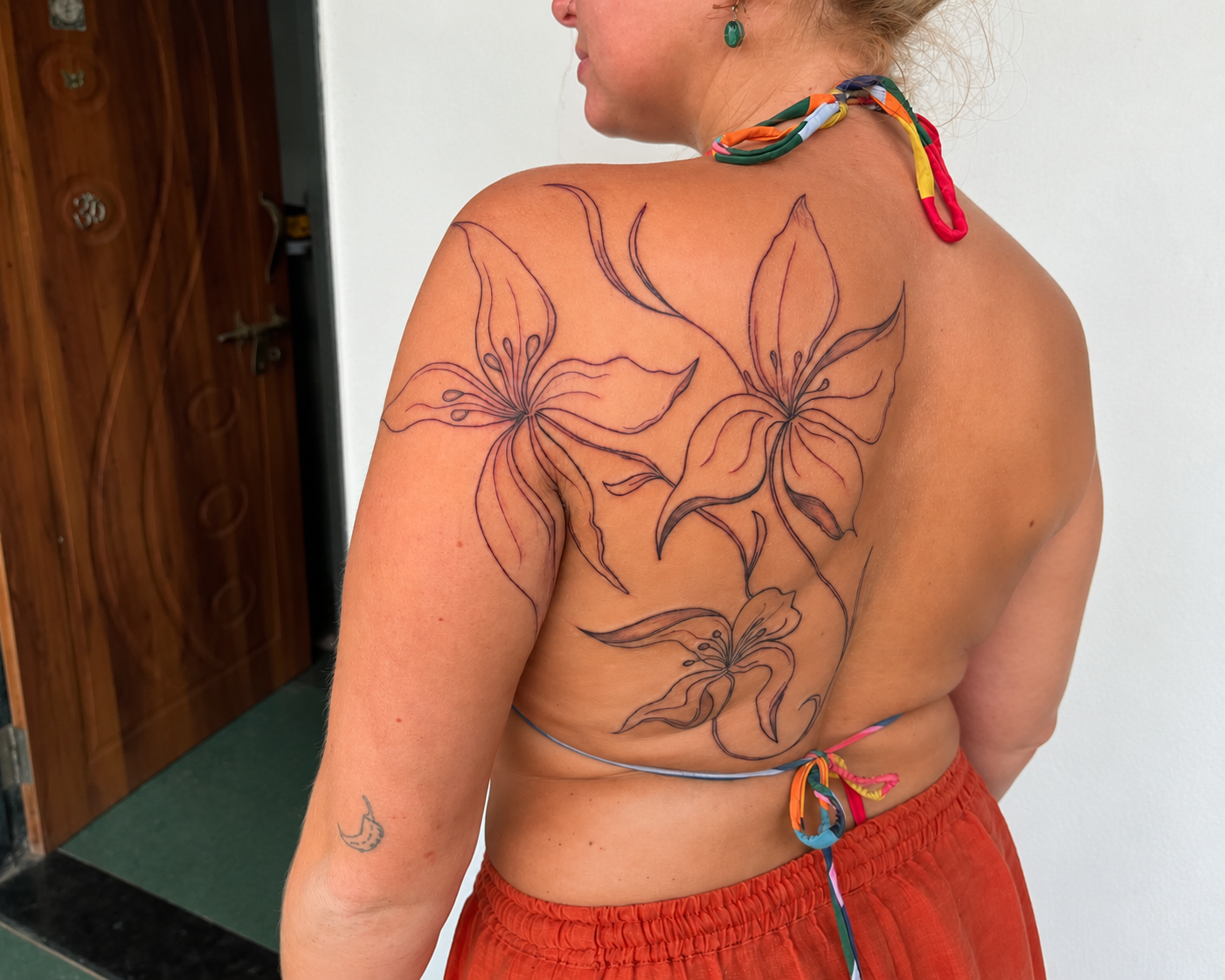
Placement is part of the design. A composition that works beautifully on a relatively flat section of the forearm may need to change when it wraps around a calf or sits near a joint. Movement, anatomy, friction, sunlight and the way skin changes over time can all influence the artist's recommendation.
This is where professional judgement matters. You can say, “I want it on my forearm and I want it to be visible, but I'm open to the exact position.” That gives the artist room to solve the technical problem without taking the decision away from you.
The same applies to size. You can give an approximate range or describe how prominent you want the tattoo to feel. The artist can then explain what size will allow the design to work properly.
Tell Your Artist How Much Creative Freedom You're Comfortable With
Not every client wants the same kind of collaboration.
Some people want to control almost every visual decision. Others know the subject and feeling they want but would rather let the artist determine the composition. Neither approach is automatically better.
The important thing is to say which kind of collaboration you are comfortable with. You might say, “These are the elements I definitely want, but I'm open to how you compose them.” Or you might say, “I have a very specific layout in mind and I want to stay close to it.”
Creative freedom does not mean surrendering control. You should still be able to review the proposed concept, ask questions and decide whether you want to proceed. The artist's role is to bring professional judgement, not to override your decision.
What a Good Tattoo Consultation Actually Sounds Like
A useful consultation might sound surprisingly simple.
Client: “I want something connected to a period of change in my life. I don't want the meaning to be obvious, and I prefer black and grey. I like the movement in these two references, but I don't want the same imagery. I'm thinking about the outer forearm, around this size, and I need it to be reasonably easy to cover at work. I'm open to your ideas as long as the final piece still feels calm rather than aggressive.”
Artist: “That gives me a good direction. The references tell me what kind of movement and visual density you respond to. We can look at the forearm shape and work out how the composition should flow. I'll keep the meaning subtle rather than literal, and I'll show you how the scale affects the detail.”
That is a much more useful starting point than simply saying, “Can you make something like these?” The client has communicated the why, the feeling, the visual direction, the boundaries, the placement, the practical requirement and the amount of creative freedom.
Red Flags: When Your Artist Isn't Listening
A tattoo consultation should involve professional disagreement sometimes. An artist may tell you that a particular size is too small for the amount of detail you want, that a placement will distort the composition, or that a technique may not age as you expect. Those are not automatically red flags.
The concern is how that disagreement is handled.
Be cautious if an artist dismisses important constraints without explaining why, ignores reasonable placement concerns, refuses to answer questions, pressures you to approve something you are uncomfortable with, or pushes a design simply because it is their personal preference.
A good artist should be able to explain technical decisions in a way you can understand. They should also listen when you explain what matters to you.
You don't need an artist who agrees with every idea you have. You need an artist who can have a productive conversation with you and give you enough information to make an informed decision.
The Best Brief You Can Give a Tattoo Artist
Before your consultation, you can make the conversation easier by preparing a short brief. It does not need to be formal.
- What I want the tattoo to represent. 2. The feeling I want it to have. 3. References I like and why I like them. 4. Things I definitely don't want. 5. My preferred placement. 6. My approximate size. 7. How visible I need it to be. 8. My colour preference. 9. How much creative freedom I'm comfortable giving the artist. 10. Any practical concerns or questions I have.
For example:
“I want a black-and-grey tattoo that represents a new beginning, but I don't want an obvious symbol of transformation. I like the movement and negative space in these references, but I don't want the same imagery copied. I'd like it on my outer forearm, roughly this size, and I need to be able to cover it at work. I'm open to the artist interpreting the concept as long as the final design feels understated rather than dramatic.”
That is a brief an artist can work with. It describes the decision without pretending you already know the answer to every design question.
Final Takeaway
You do not need to arrive at a tattoo studio with a finished tattoo. You need to arrive with enough information for the artist to understand what matters to you.
Tell them the reason, the feeling, the references you respond to, the things you definitely do not want,
and the practical realities around size, placement and visibility. Be clear about how much creative freedom you are comfortable giving them.
A good consultation is a conversation, not a design-order form. The clearer you are about the why, the easier it becomes to discover the what.
Artist Advice
Artist perspective:
The most useful thing a client can bring into a consultation is clarity about what matters to them, not certainty about every visual detail. When I understand the reason behind a tattoo, what the client responds to visually, and what they want to avoid, I have a much better foundation for making professional decisions about composition, placement and scale. The client remains the person making the final decision; my job is to help turn their idea into a tattoo that works on their body.
Frequently Asked Questions
How should I explain my tattoo idea to an artist?
A:
Start with the reason, feeling and visual direction rather than trying to describe every detail of the finished tattoo. Bring references and explain what you like about each one, then add your preferred placement, approximate size, visibility requirements and anything you definitely do not want.
How many tattoo reference images should I bring?
A:
There is no magic number. A small group of useful references is generally better than a large folder of unrelated images. Choose examples that communicate something specific and explain what you like about each one.
Should I already know the exact size and placement?
A:
You should have a preferred area and a general idea of scale, but you do not need to know the technically perfect placement. Your artist can explain how anatomy, movement, composition and long-term wear affect the final position and size.
How much creative freedom should I give my tattoo artist?
A:
Give as much freedom as you are genuinely comfortable with. You can define the non-negotiable elements and leave composition or visual interpretation open. Creative freedom should still include a clear approval process before the tattoo is performed.