You find the tattoo you want at 1:14 a.m. It is perfect. The lines are right, the proportions look effortless, and you save it immediately. There is just one problem: that tattoo was designed for somebody else’s body. That does not make the reference wrong. In fact, it may be exactly what you need to explain your taste. But a tattoo is not a sticker, and skin is not a sheet of paper. The same artwork can behave very differently when it moves from a photograph or digital screen onto a particular arm, shoulder, thigh, ribcage or back. The body has curves. It moves. Available space changes. Details that look obvious on a phone can become crowded at tattoo size. A composition that works beautifully on one person’s forearm may feel awkward on another person’s. That is why a strong tattoo consultation is not really about copying a picture perfectly. It is about understanding what you loved about the picture and then designing something that makes sense on you.
Your reference is a starting point, not a blueprint
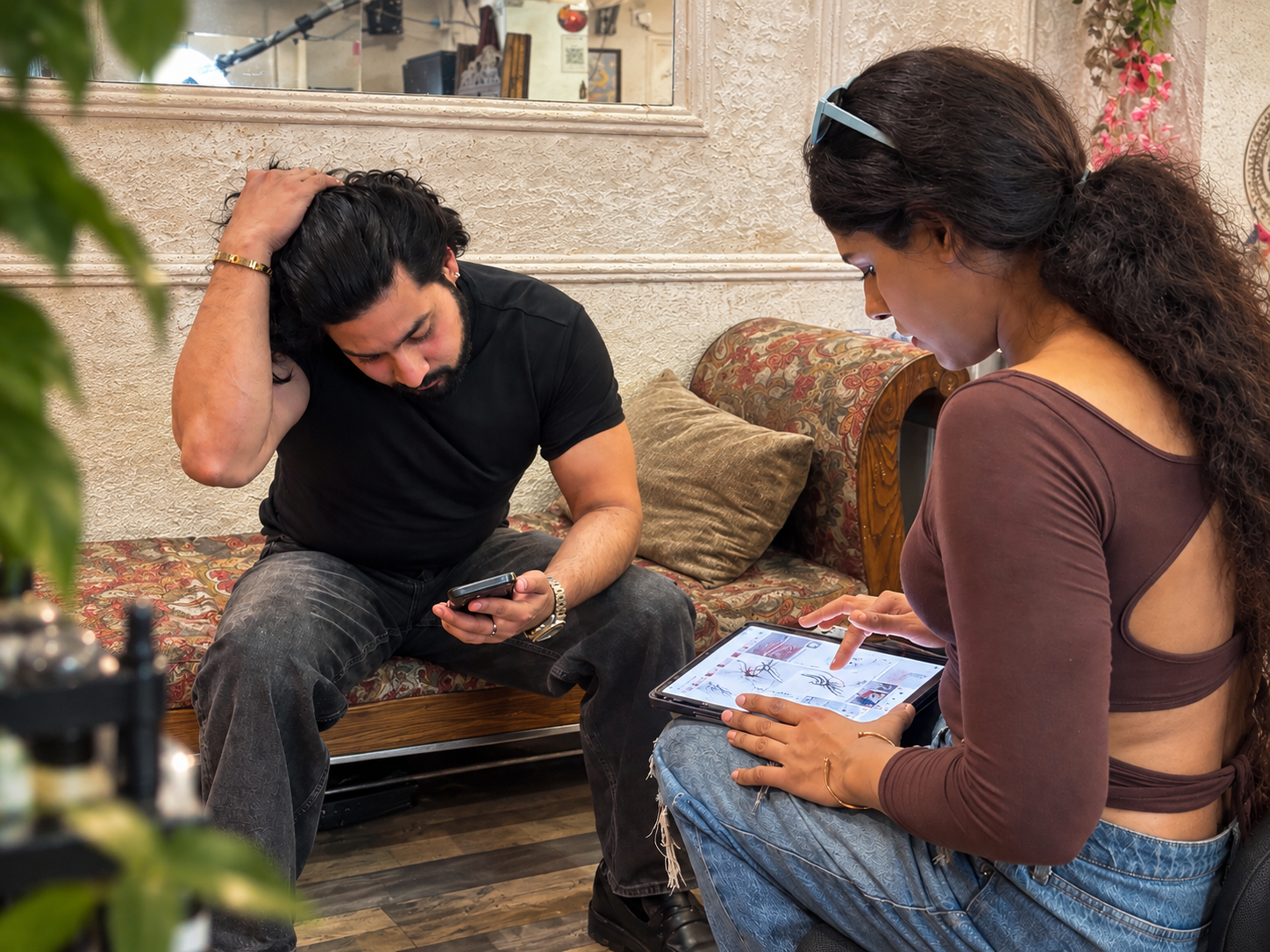
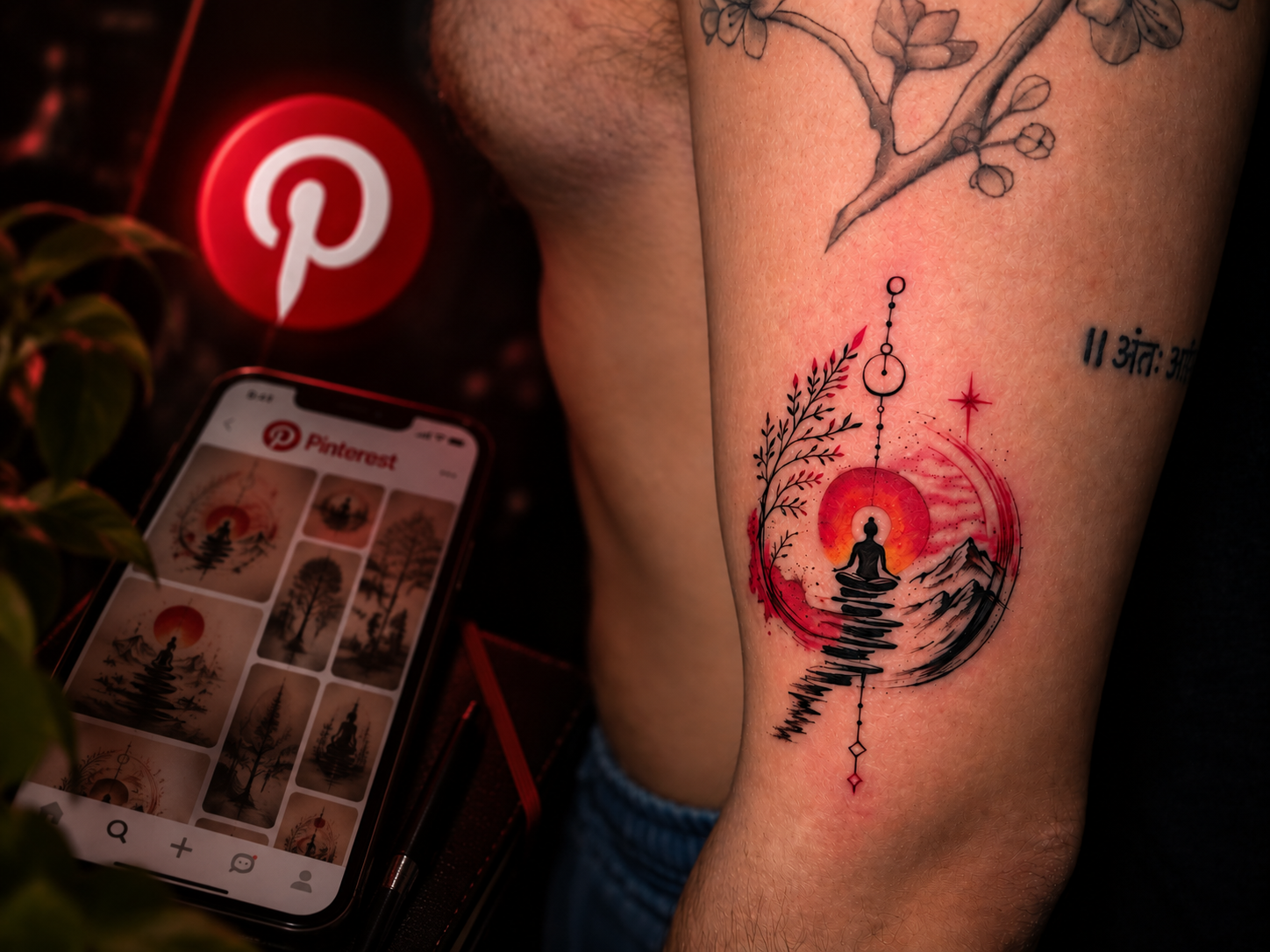
Pinterest, Instagram and saved-photo folders are useful for discovering tattoo styles, artists, subjects, compositions and details you may not know how to describe. But a reference image answers one question: “What do I like looking at?” It does not automatically answer: “What should this look like on my body?” If you bring an artist a botanical tattoo wrapped around somebody else’s upper arm, you may be responding to the leaves, density, movement or delicate linework. You may not actually need the exact same arrangement. The useful information is inside the reference. Maybe you love how the leaves taper toward the elbow. Maybe you like the amount of empty skin between elements. Maybe it is the balance between a darker central shape and lighter details. Those are design clues. A strong consultation turns those clues into a tattoo rather than treating the reference as an instruction sheet. Several references can sometimes be even more useful than one “perfect” tattoo because they reveal recurring preferences in linework, openness, contrast and subject matter. The goal is not to reproduce your saved image. It is to understand why you saved it.
A design that works on a screen still has to survive real skin
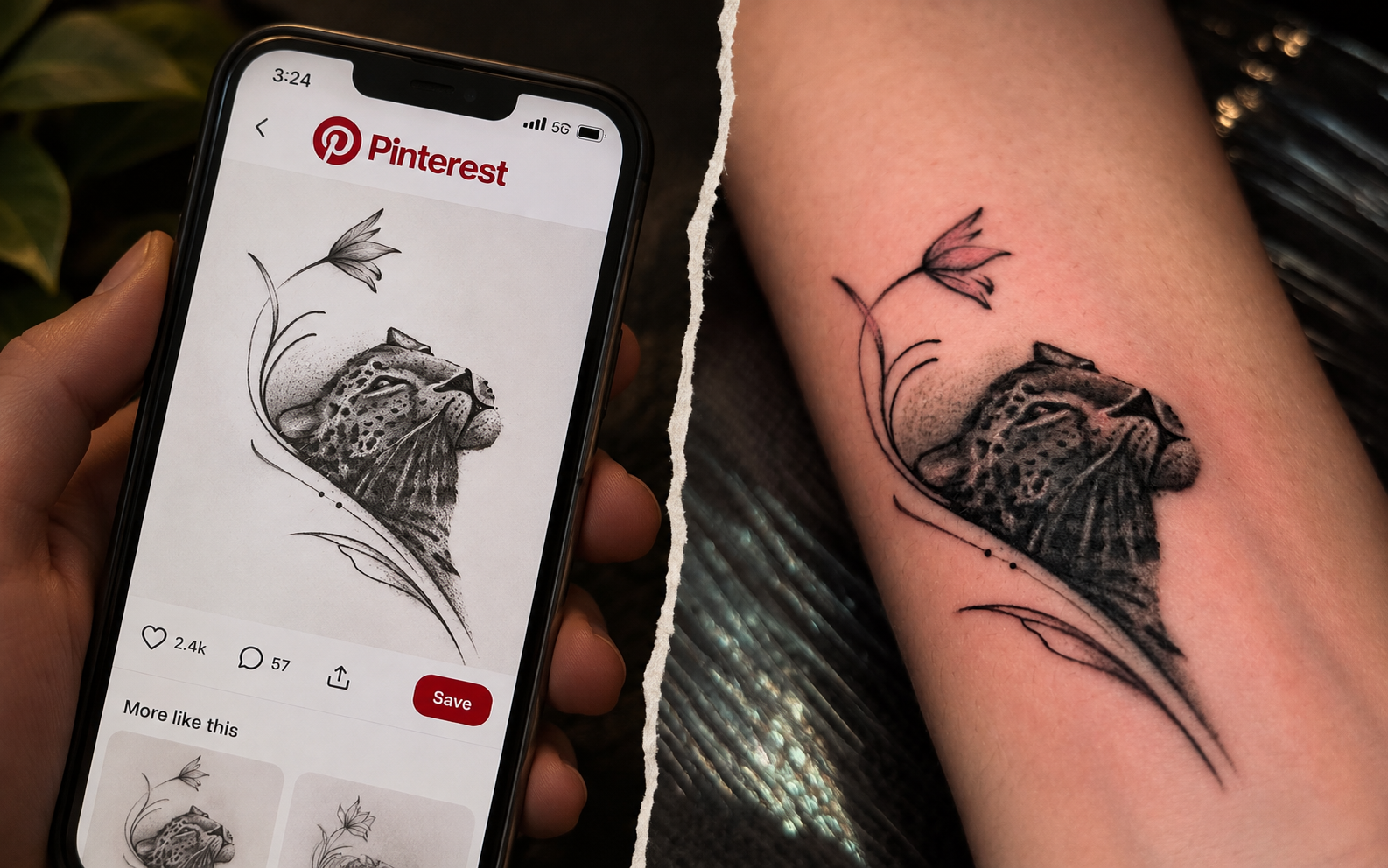
Your phone is an unusually forgiving place to look at tattoo artwork. The image is flat, lighting is controlled, you can zoom in, and every detail is visible. Your body gives the tattoo a harder job. Skin curves. Arms rotate. Shoulders rise and fall. Legs bend. Ribcages move with breathing. A tattoo may be viewed from several angles rather than from the single perspective of a reference photograph. Scale changes everything. An intricate design that looks beautiful on a screen may become too dense when reduced to a small tattoo. Tiny gaps can disappear visually. Fine details can compete with one another. A composition can lose the breathing room that made it attractive. The answer is not automatically to make every tattoo bigger. Sometimes the better solution is to simplify. Sometimes proportions need to change. Sometimes more negative space is needed. Sometimes the placement itself needs reconsidering. The tattoo has to work at the size and location where you will actually wear it. This is one of the less glamorous parts of design, but it is where a beautiful reference becomes practical body art.
Your anatomy changes the composition
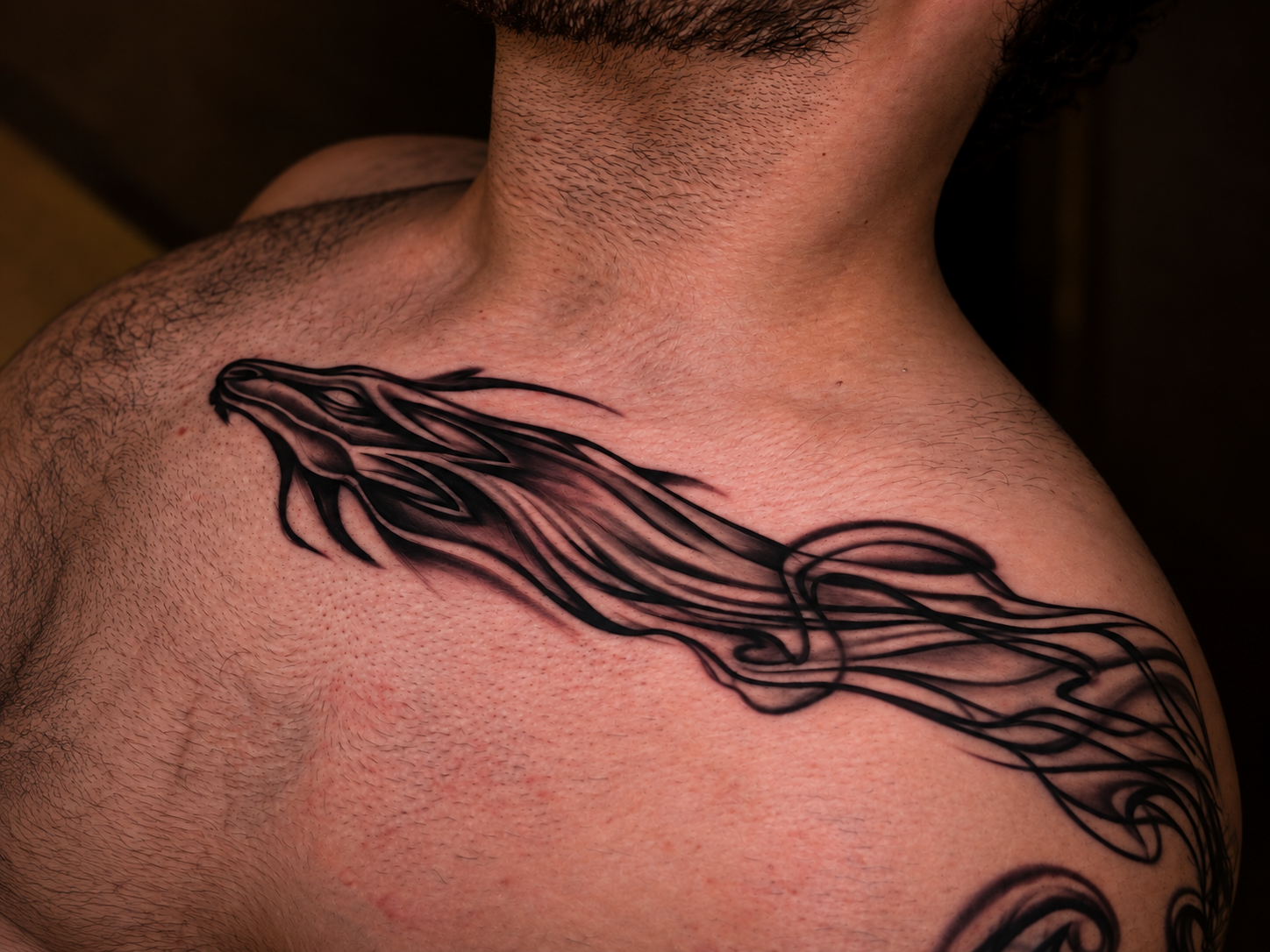
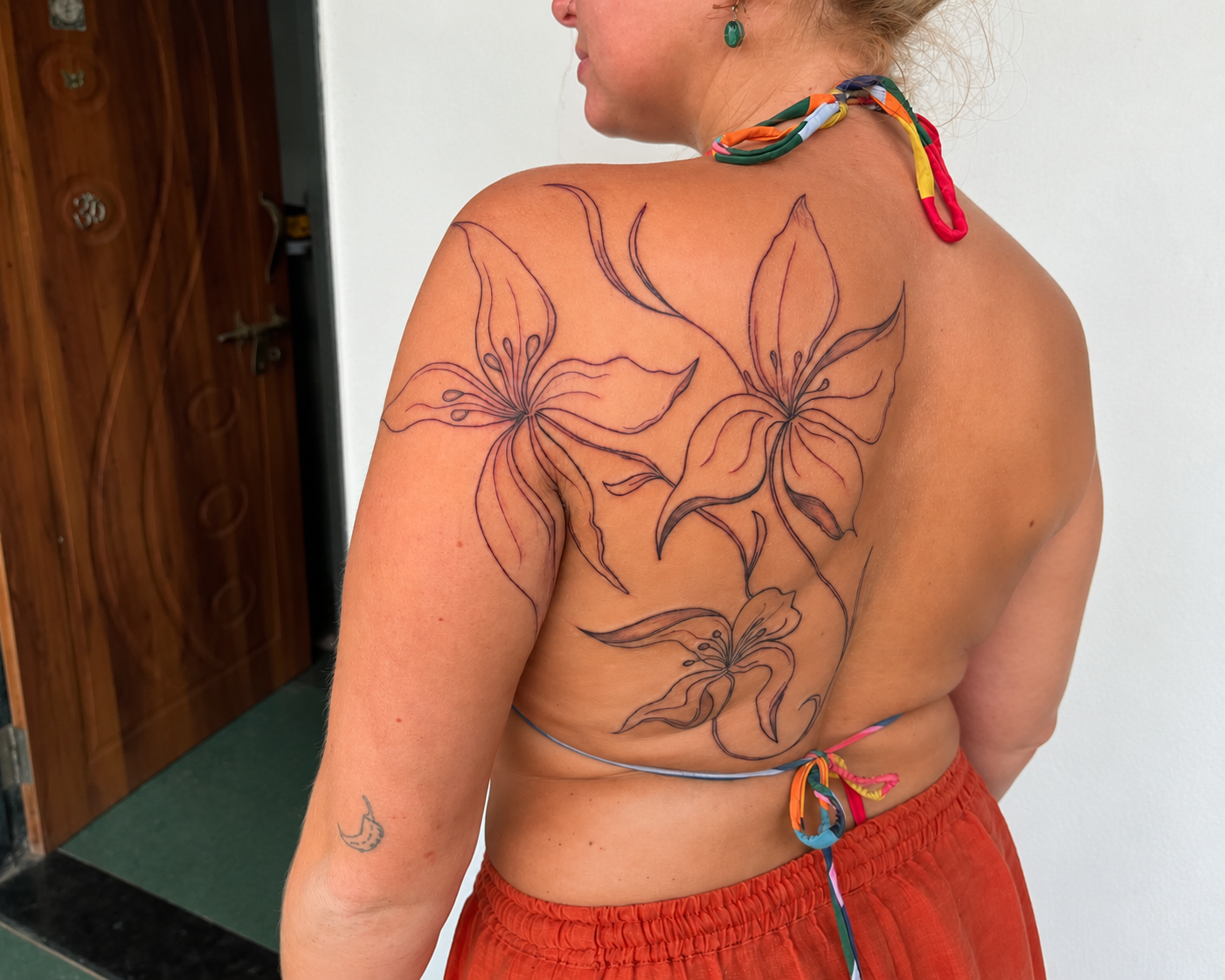
Two people can have the same tattoo placement and still need different artwork. A forearm is not a rectangular area waiting to be filled. It has length, width, taper, joints and rotation. A shoulder is rounded. The chest changes direction across the body. The calf narrows toward the ankle. The ribs create a moving surface rather than a flat canvas. Good tattoo design pays attention to those shapes. Imagine a vertical design with a strong central line. On one person’s forearm, it may follow the natural length of the arm and look balanced. On another, the same proportions may feel too short or too wide. The design has not become bad; it simply needs to be interpreted differently. This is why artists talk about flow. Flow is the relationship between the artwork and the anatomy underneath it. A design can follow a muscle, wrap around a curve, open toward a joint or deliberately leave space where movement makes the composition more interesting. The finished tattoo may look slightly different from the Pinterest reference. That can be a sign that the artist has done the job properly.
Why your artist may change the design you asked for
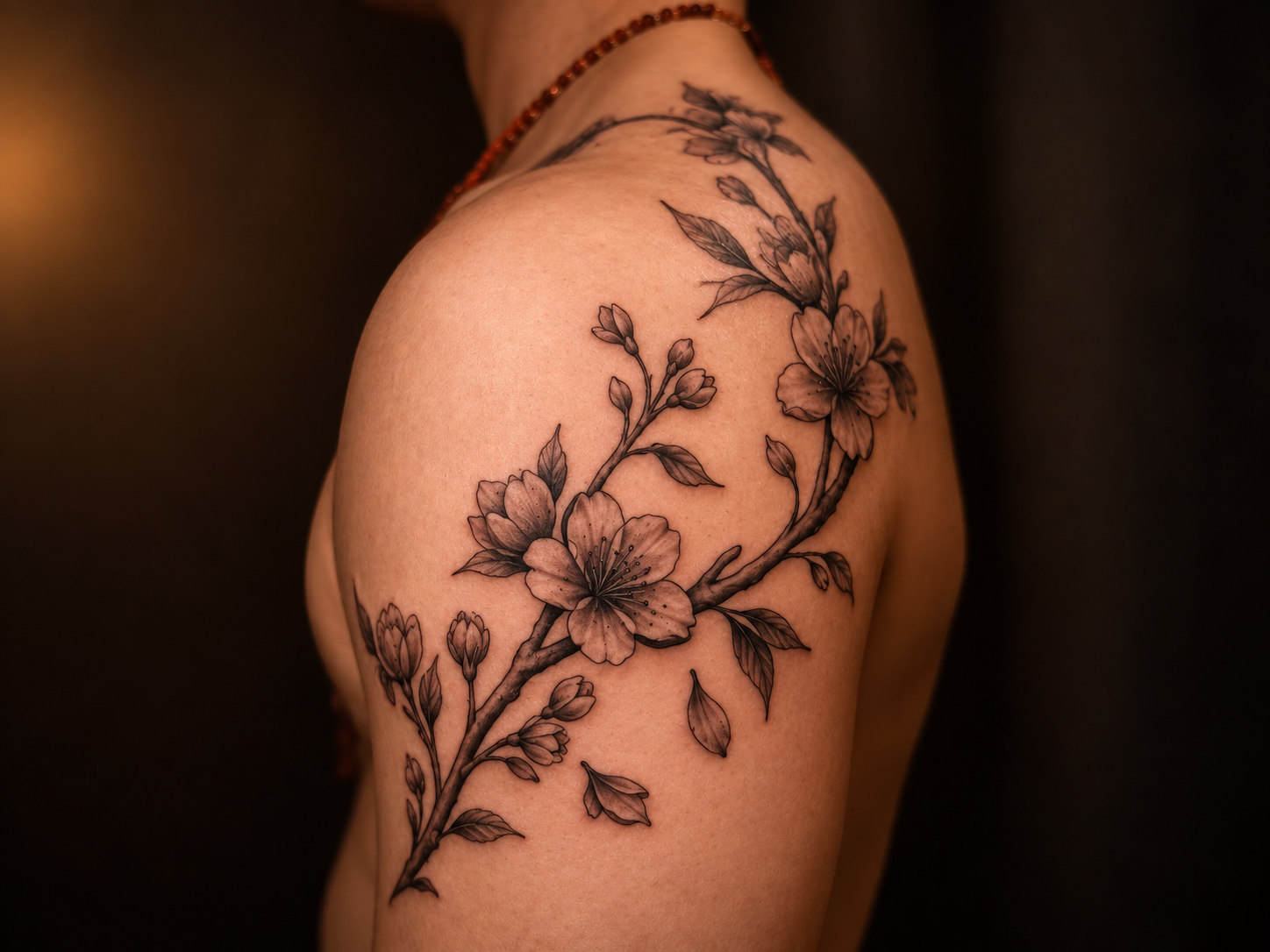
Clients sometimes worry when an artist suggests changing a reference. It can feel like you have finally found the image you want and someone is trying to talk you out of it. There is a useful difference between changing the idea and changing the execution. An artist may preserve the subject while changing the composition. They may keep the same flower but alter its angle. They may retain the silhouette while removing details that would crowd the piece. They may adjust one element so the tattoo has a clearer visual hierarchy. Those changes do not necessarily mean the original idea was bad. They can mean the artist is thinking about the finished tattoo rather than the reference image. There are also situations where an artist should push back more firmly. A design may contain too much detail for the requested size. A placement may not give it enough room to breathe. A style may not match the artist’s strengths. A reference may also rely on digital effects that do not translate cleanly into tattooing. The better question during a consultation is not “Will you copy this exactly?” It is “What makes this reference work, and how can we make those qualities work on me?”
The same tattoo can look completely different at different sizes
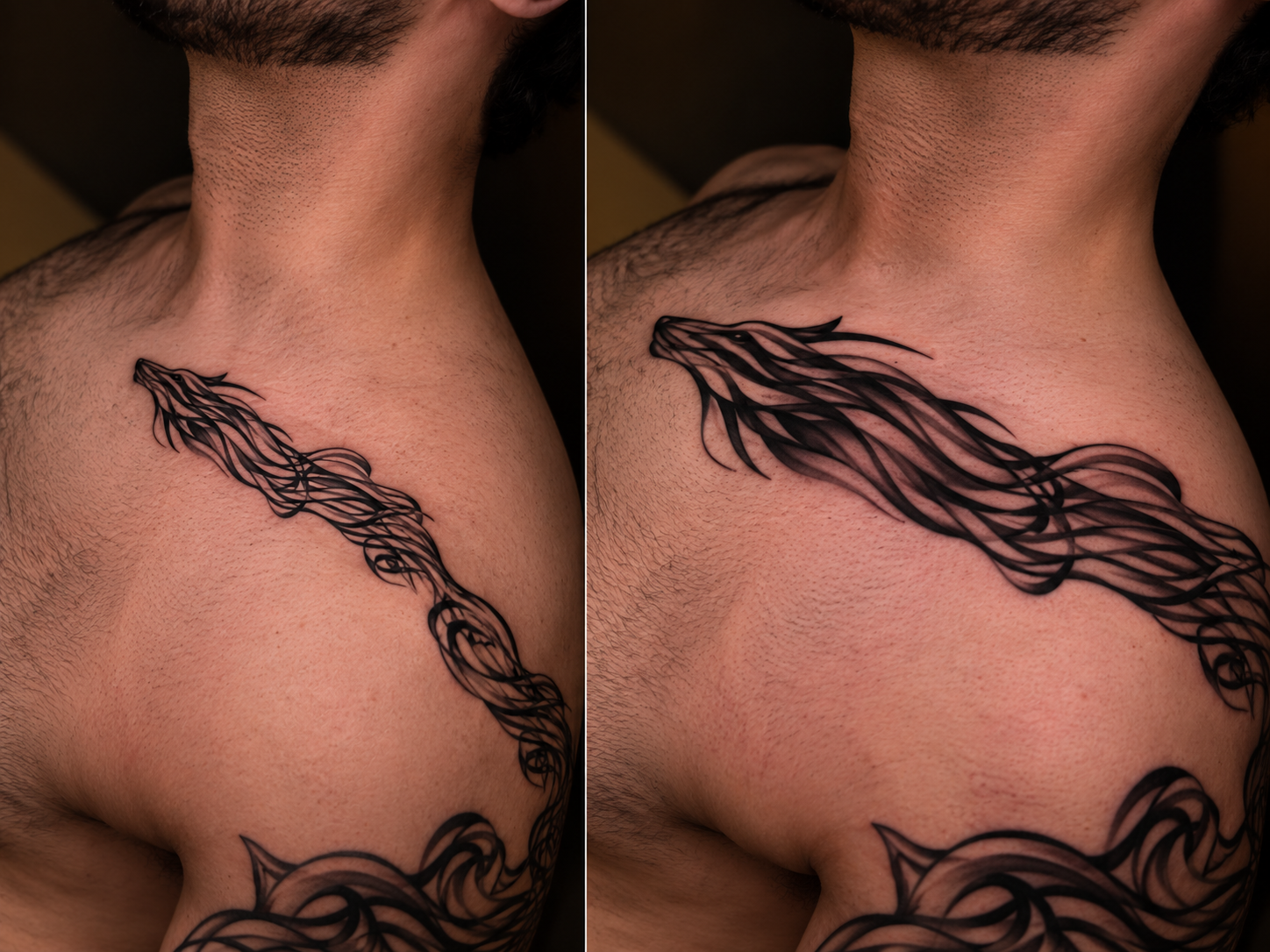
One of the easiest mistakes is assuming that changing size is simply a matter of scaling an image up or down. It is not. When artwork becomes smaller, relationships between details change. Tiny facial features have less room to remain readable. Closely packed leaves can merge visually. Small lettering loses breathing room. Delicate ornamental patterns can become busy. When artwork becomes larger, different questions appear. Empty areas become more noticeable. Shapes need enough visual weight to hold the composition together. A design that worked beautifully as a small accent may need additional structure when expanded. This is why “I want it exactly this size” can sometimes be less useful than explaining what you want the tattoo to feel like. Do you want it subtle? Graphic? Airy? Detailed? Bold from a distance? Quiet up close? Those answers give an artist room to make the design work. The goal is not to preserve every pixel of a reference. It is to preserve the visual experience that made you fall in love with it.
Your references can tell an artist what you like, even when you cannot explain why
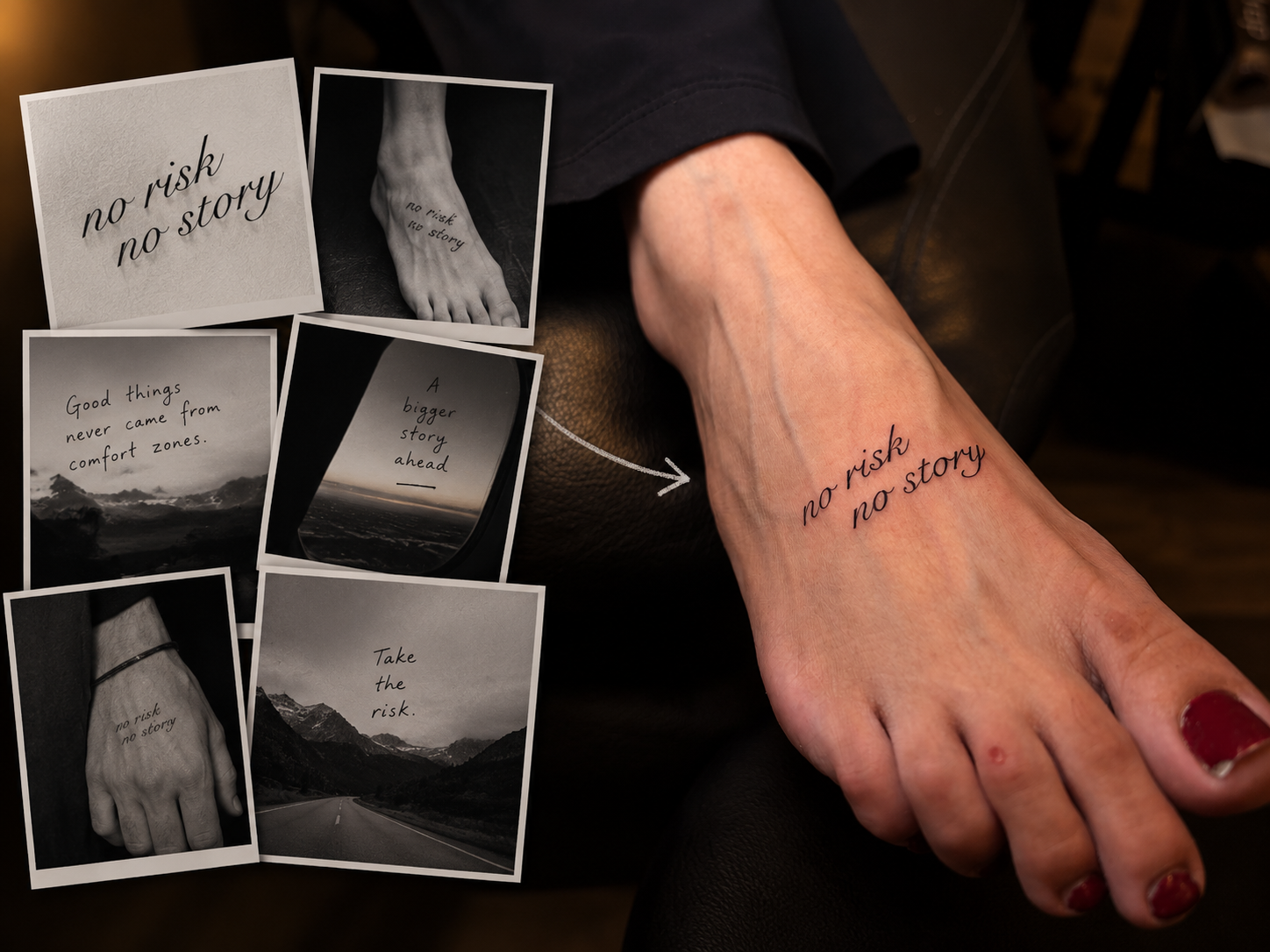
You do not need to become a designer before getting a tattoo. You may not know the name of the style you like. You may not know why one botanical tattoo feels elegant while another feels cluttered. You may simply notice that you keep saving the same kind of image. That is useful information. Bring the images and talk about what you notice. Maybe you like open compositions but dislike heavy black areas. Maybe you want realism but prefer softer contrast. Maybe you love fine-line work but do not want the tattoo to feel fragile. Maybe you like ornamental symmetry but want the final piece to feel less formal. These details give the artist something to work with. In a professional consultation, the reference is evidence of your taste, not proof that the final tattoo should be identical. This is especially helpful when you have several references that seem unrelated. An artist can identify the qualities they share and work out which ideas can coexist. Sometimes the best custom design is not a completely new idea. It is the clearest version of the ideas you were already collecting without knowing how to connect them.
Original does not have to mean completely unfamiliar
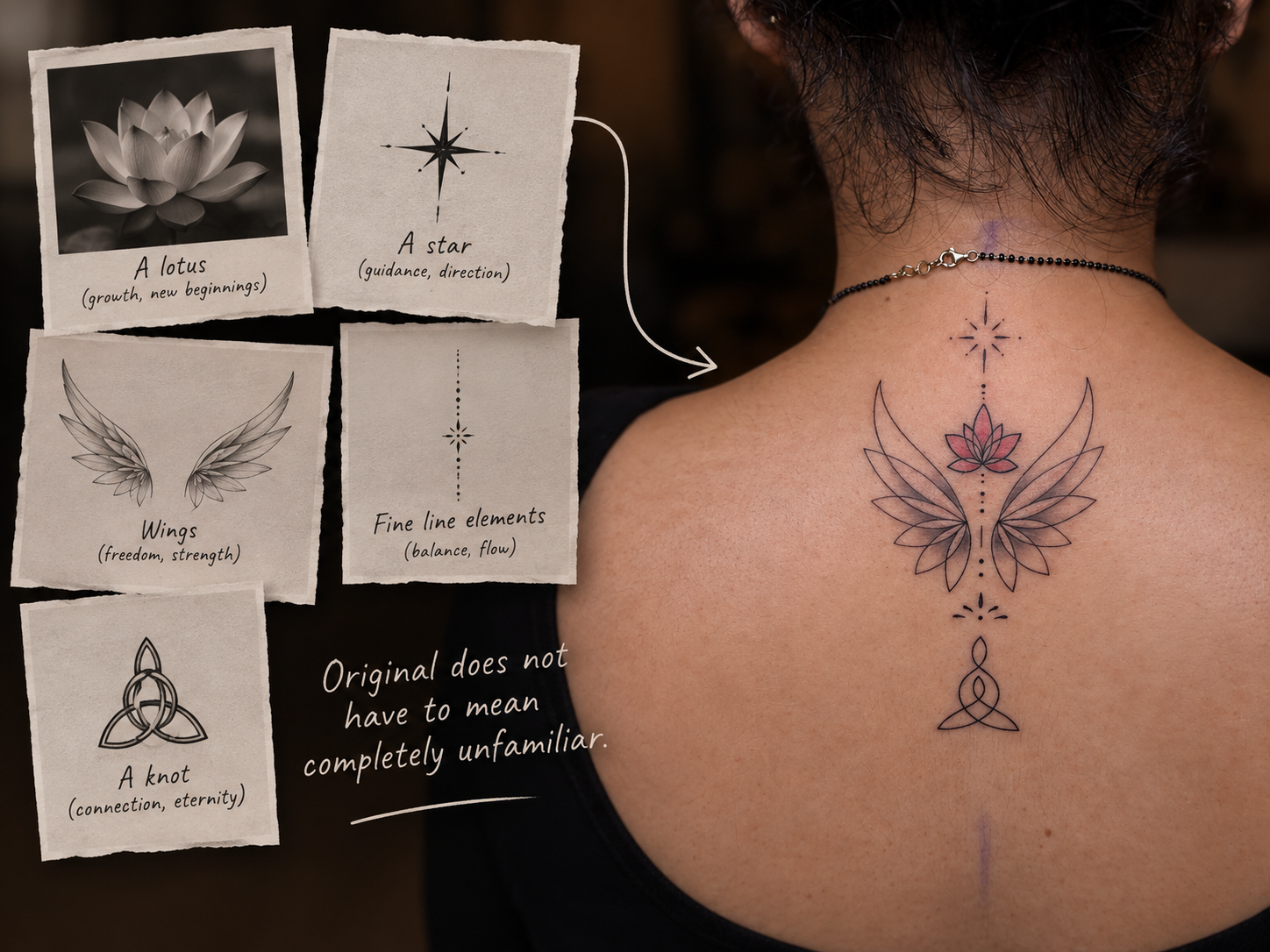
There is another misconception hidden inside the pressure to copy or completely reinvent a reference. A custom tattoo does not have to be something nobody has ever imagined before. Flowers are still flowers. Snakes are still snakes. Portraits, lettering, animals, ornamental forms and geometric shapes will always overlap with tattoos that already exist. What makes a tattoo personal is often the combination: subject, composition, scale, placement, style and the decisions made for the person wearing it. Suppose you love a particular moth tattoo online. You may love its wing structure, open negative space and vertical placement. A custom version might use a different moth, a different wing position and a composition designed specifically for your forearm. It can keep the visual character you were drawn to while becoming its own piece. The objective is not novelty for novelty’s sake. It is fit. A tattoo should fit the body, the person’s taste and the practical realities of tattooing.
The best question to bring to a tattoo consultation
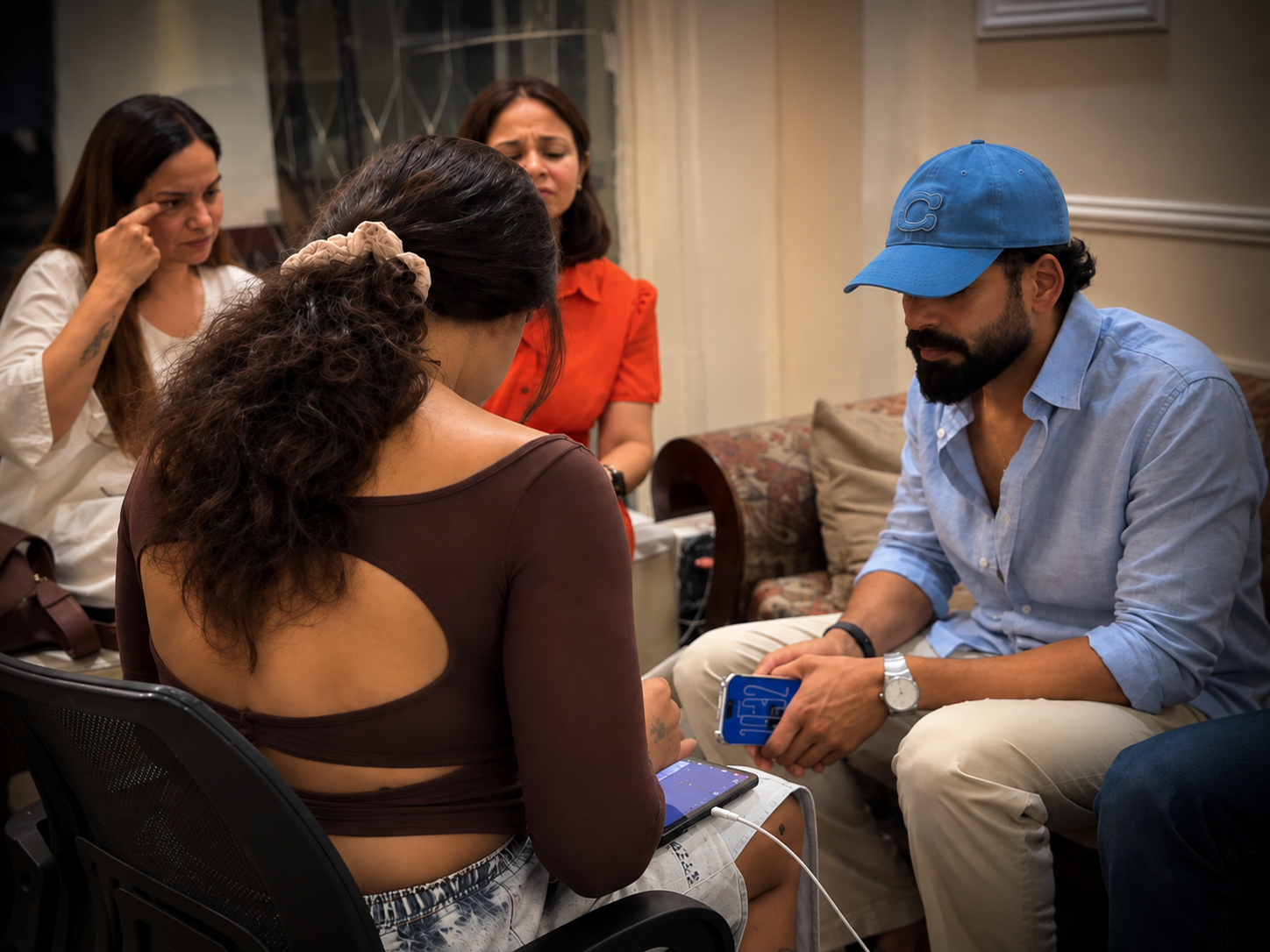
Instead of asking your artist to copy your Pinterest board, try bringing a different question: “What do you think makes these references work?” That opens a much better conversation. Show the designs you love and, if useful, a few you dislike. Point out details that keep appearing in your saved images. Explain the placement you have in mind and how visible you want the tattoo to be. Then let the artist evaluate the idea against your anatomy, the chosen scale and the style they actually tattoo well. This does not mean handing over control. You should still be clear about what you want. It means giving the artist enough information to solve the design problem with you. The finished tattoo may look different from the image that first caught your attention. Ideally, that difference should make sense. Because the goal was never to own the Pinterest tattoo. The goal was to understand why you wanted it—and turn that feeling into artwork that belongs on your body.
Related reading
- Your Tattoo Artist Is Not a Mind Reader — Here's How to Explain What You Actually Want
- Your First Tattoo Shouldn’t Be a Design — It Should Be a Decision
- Can a Fine Line Tattoo Tell a Big Story? — The Story Behind the Ink
- Creative Ways to Transform an Ex's Name Tattoo
Final Takeaway
A Pinterest reference can be the beginning of a great tattoo. It just should not be the final design by default. The strongest tattoo decisions happen when the reference is treated as a conversation starter: something that reveals your taste, preferred style, relationship with detail and the visual qualities you are drawn to. From there, the artwork has to meet reality—your anatomy, placement, scale, skin and the technical demands of tattooing. A good custom tattoo may not look exactly like the picture that inspired it. That is not a failure to follow the reference. It is the point. Your Pinterest board can show an artist what you love. The finished tattoo should show that they understood it.
Artist Advice
Professional advice: clients do not need to arrive with a finished tattoo design. References are most useful when they communicate taste—line quality, composition, subject matter, density, contrast, mood and placement. During a consultation, the artist should look at those preferences alongside anatomy and scale. If a reference needs to be simplified, stretched, rearranged or otherwise adapted, the reason should be clear: the goal is to make the artwork function on the client’s body. A good tattoo is not a screenshot transferred to skin. It is a design decision made for a particular body.
Frequently Asked Questions
Can I ask my tattoo artist to copy a Pinterest tattoo exactly?
You can use a Pinterest tattoo as a reference, but exact reproduction is not always the best approach. An artist may need to adapt proportions, detail, composition or placement so the design works properly on your body. If the image is another artist’s original work, an original interpretation is also better than simply reproducing it.
Why does my tattoo artist want to change my reference?
The artist may be adapting the design to your anatomy, size, placement or the technical requirements of the chosen style. Changes can preserve what you like about the reference while making the finished tattoo more readable, balanced and appropriate for your body.
How many tattoo references should I bring to a consultation?
There is no fixed number, but several strong references can help reveal your preferences. A small group of images can show recurring choices in linework, composition, subjects, contrast and detail. It is also useful to explain what you dislike, not only what you like.
Does a custom tattoo have to look completely different from my reference?
No. A custom tattoo can retain the subject, mood or visual language that attracted you to the reference. What makes it custom can be the combination of composition, scale, placement, proportions and design decisions made specifically for your body.