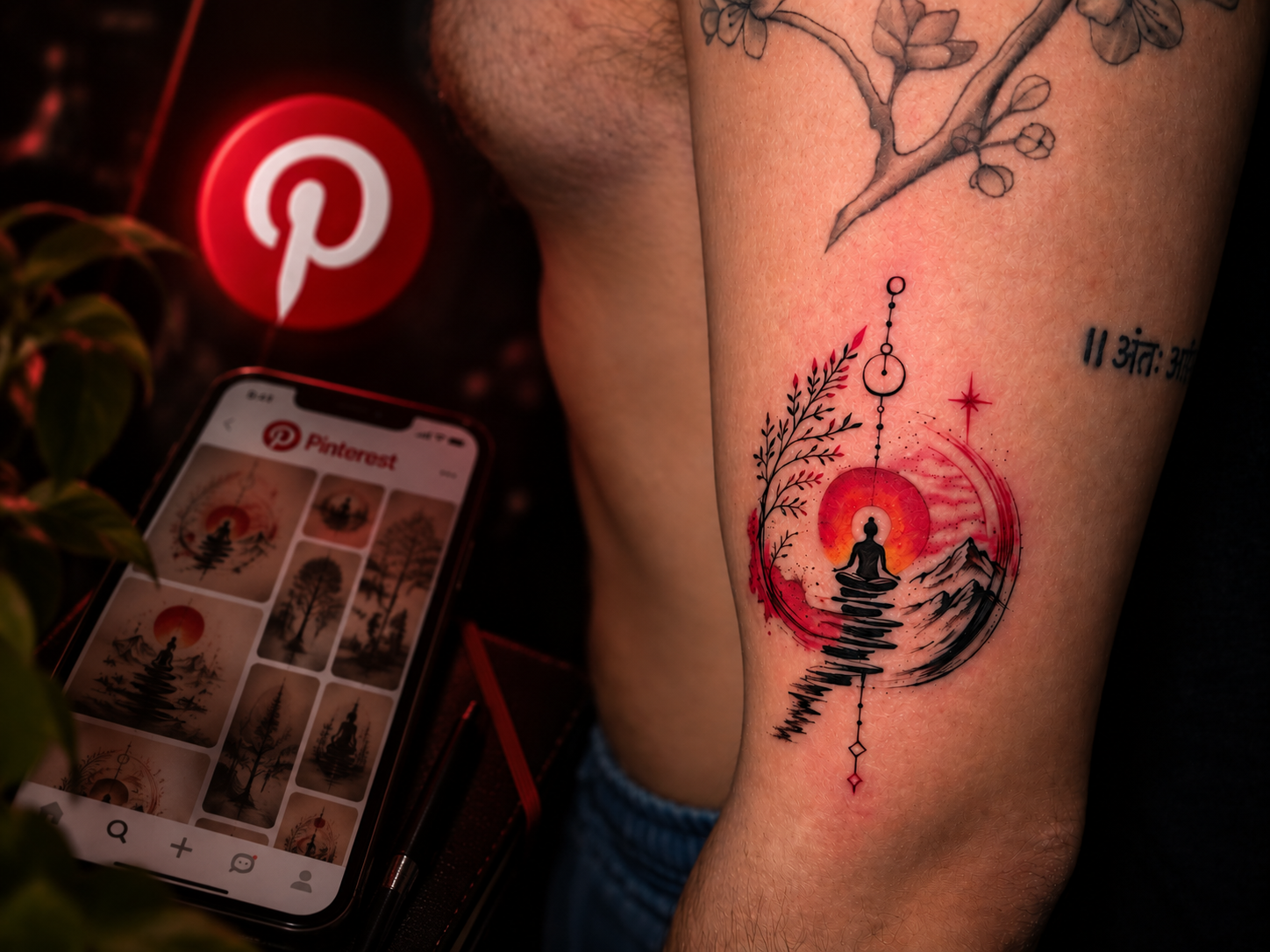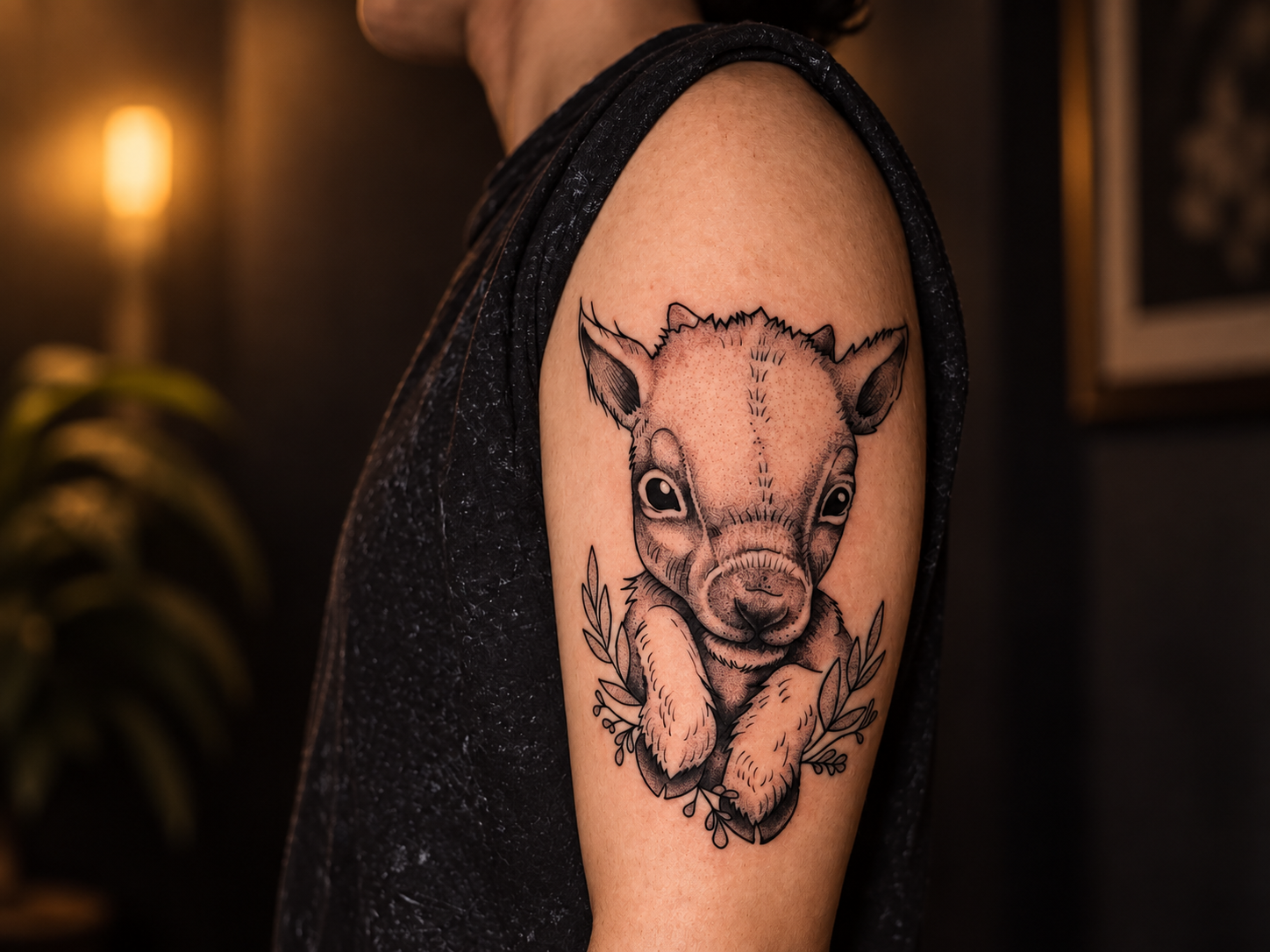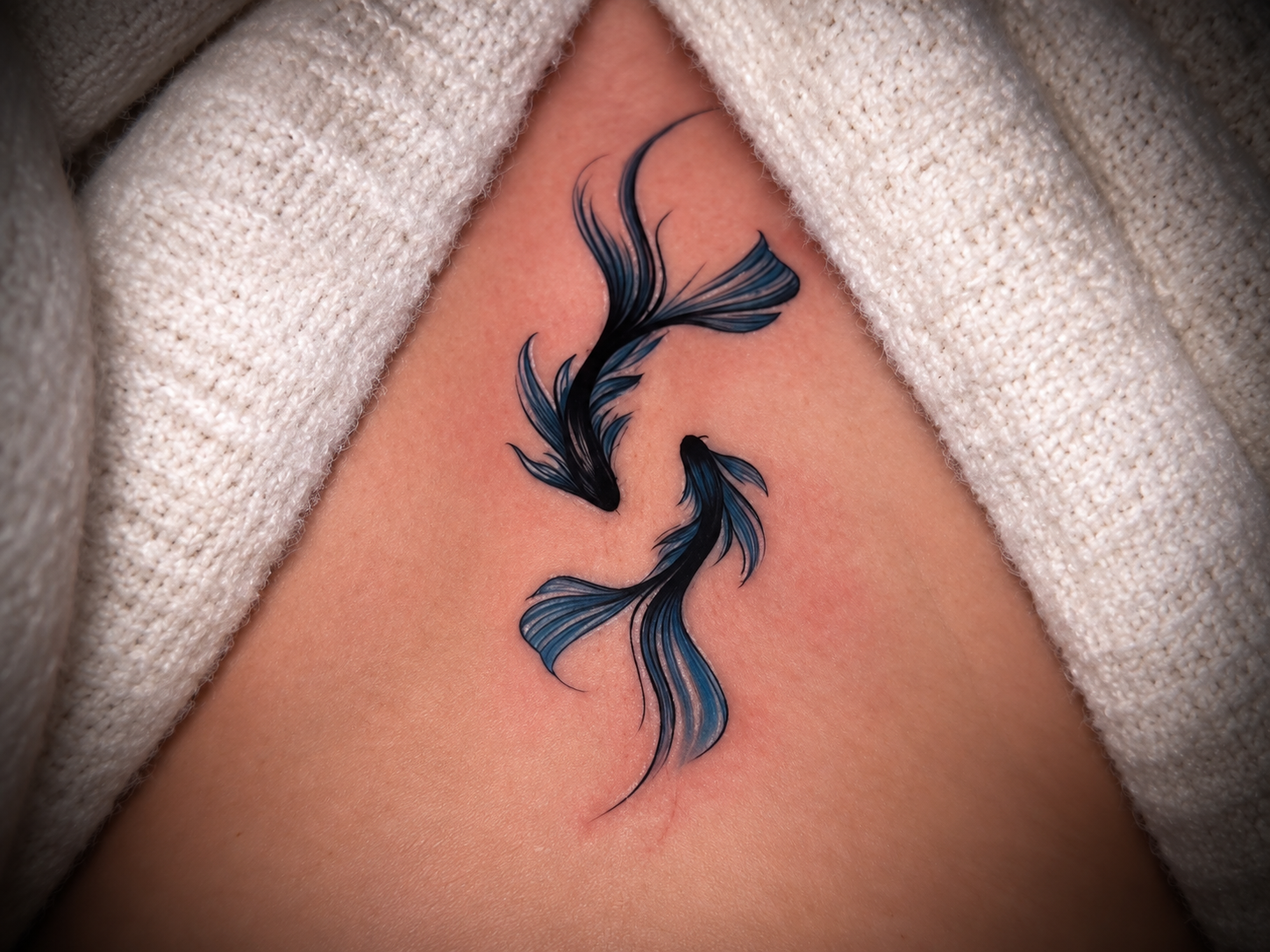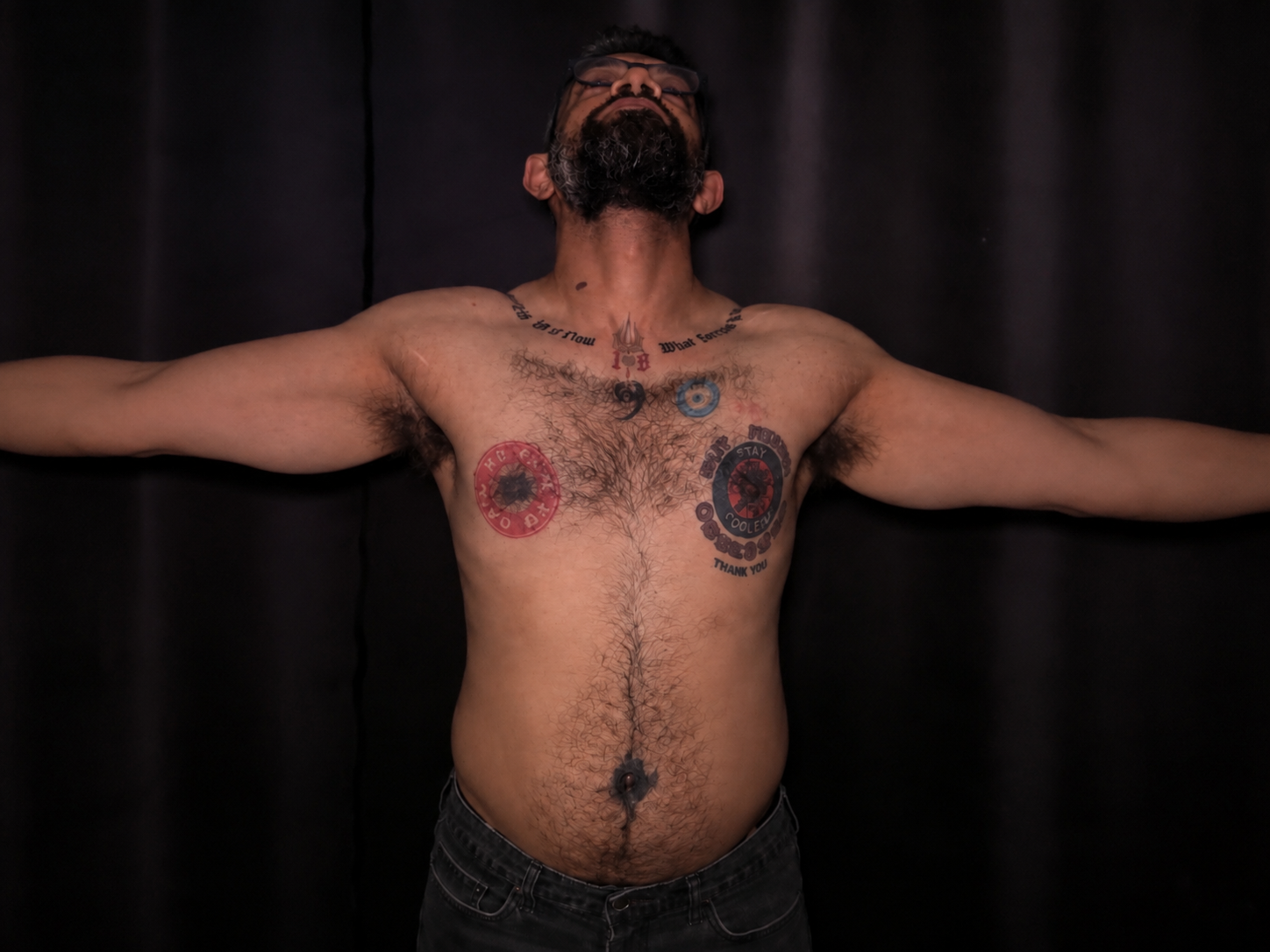
A tattoo can be permanent without being a permanent reflection of who you are. The person who chose it may have had different priorities, relationships, tastes or ideas about themselves. Years later, the design can feel less like self-expression and more like a reminder of a chapter that has already moved on. That does not automatically make the tattoo a mistake. It simply means your relationship with it has changed. A cover-up tattoo may offer a way forward—but only if the new design is planned around the reality of the old ink. Darkness, saturation, size, placement, colour and skin condition all shape the possibilities. The right approach may be a direct cover-up, a rework, or medically supervised laser lightening before tattooing begins.
You Can Outgrow a Tattoo Without Hating Who You Were
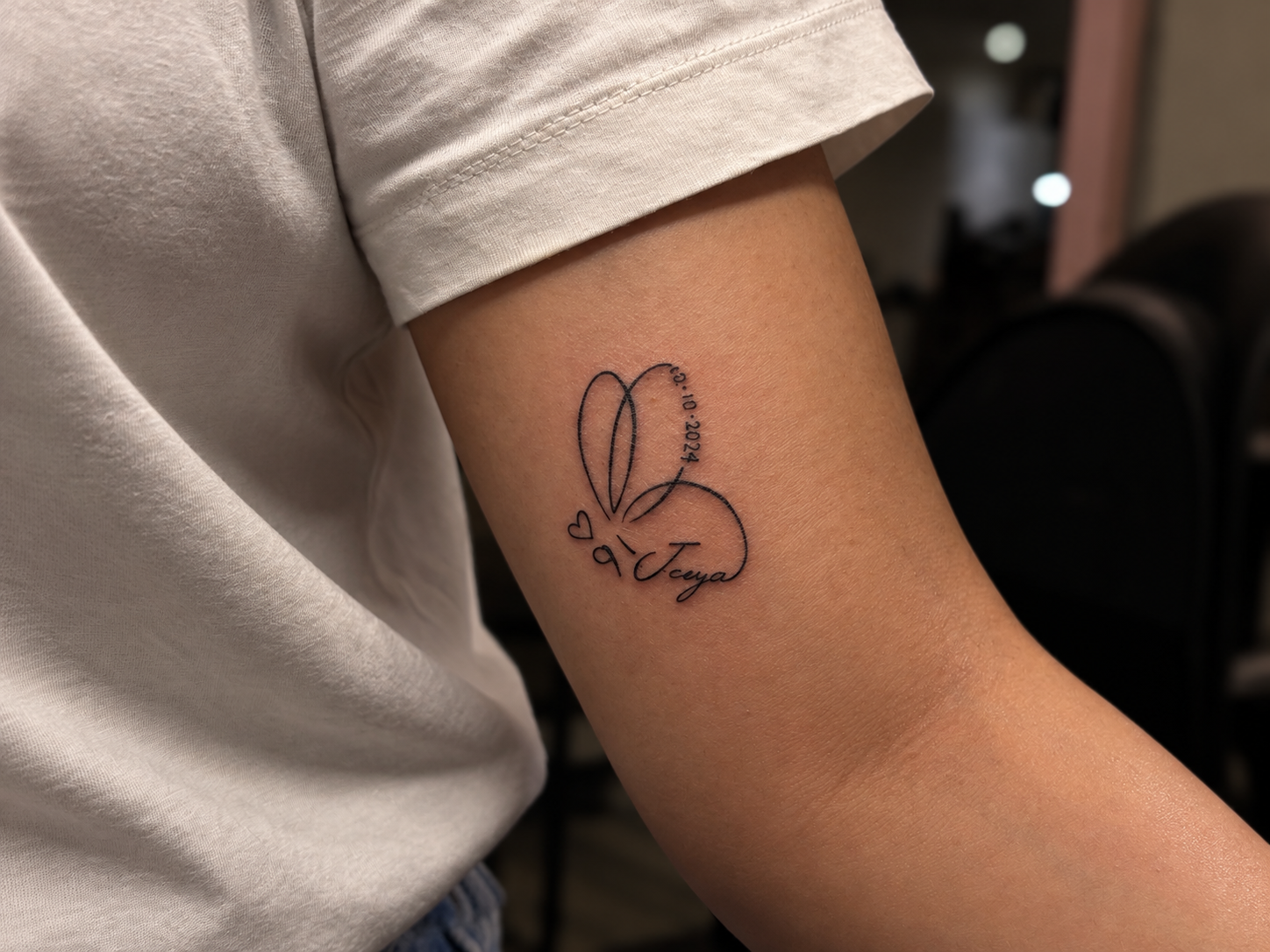
People change. Their relationships, priorities, careers, aesthetics and sense of identity change with them. A tattoo that once felt personal can eventually feel disconnected, distracting or difficult to carry. That does not mean you need to feel ashamed of the person you were. You can respect an earlier chapter and still decide that its artwork no longer belongs on your skin. A cover-up can become a way of giving an old piece a new visual direction. The goal is not merely to make the original image disappear technically. It is to create a complete design that feels intentional, balanced and relevant to you now.
Why an Old Tattoo Can Stop Feeling Like You
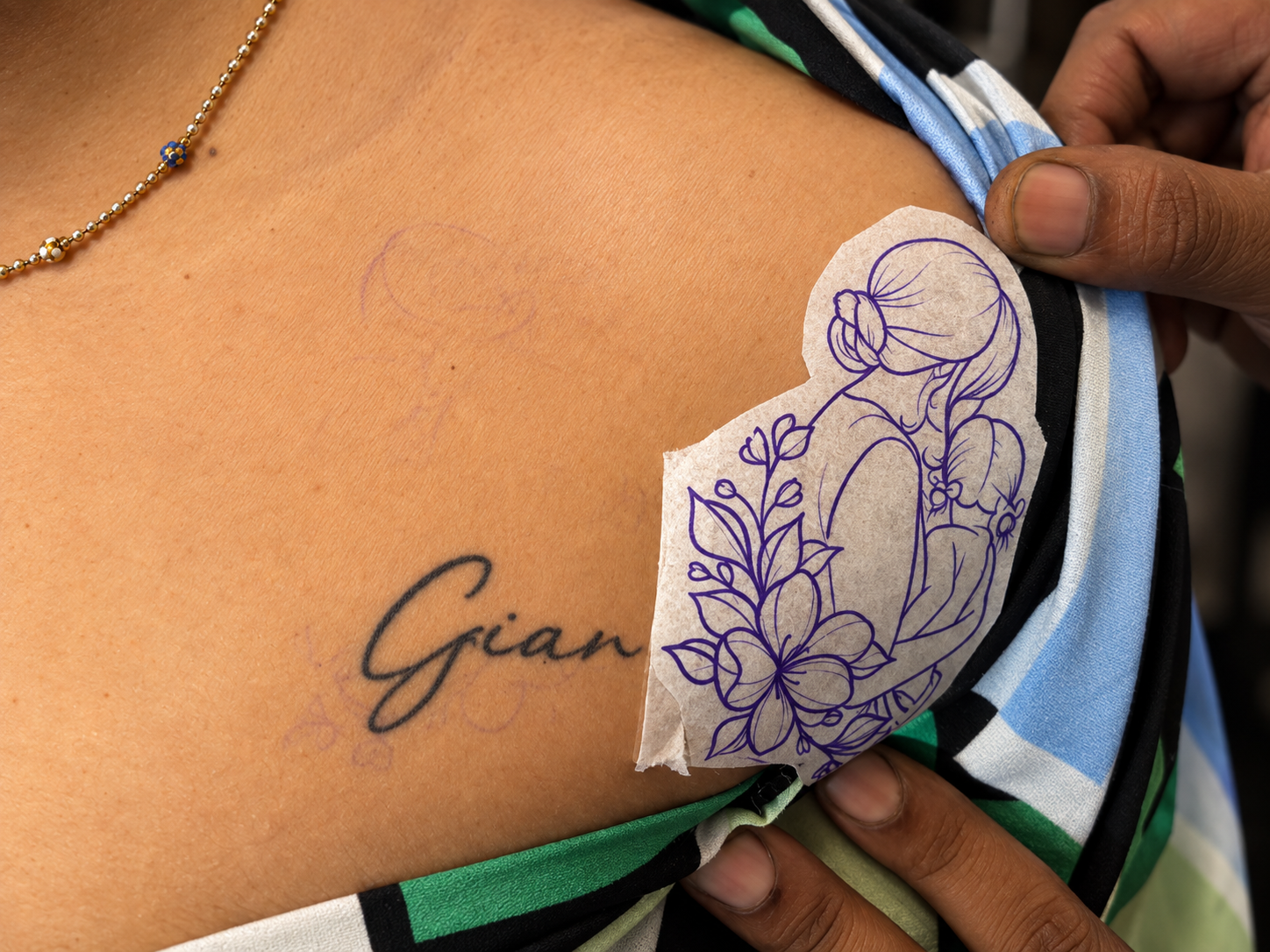
An old tattoo may represent a relationship, friendship, trend, belief or phase that no longer feels central. Sometimes the issue is purely visual: a small delicate symbol may no longer suit a bolder style, or an isolated design may interrupt the flow of newer tattoos. A piece may also have been copied from a reference image without being designed for your anatomy. The emotional reason matters because it helps guide the new design. Do you want something quieter, stronger, more refined, more symbolic or more connected to the rest of your body art? Understanding that direction is more useful than simply asking an artist to hide every visible line.
A Cover-Up Is a New Tattoo Designed Around Existing Ink
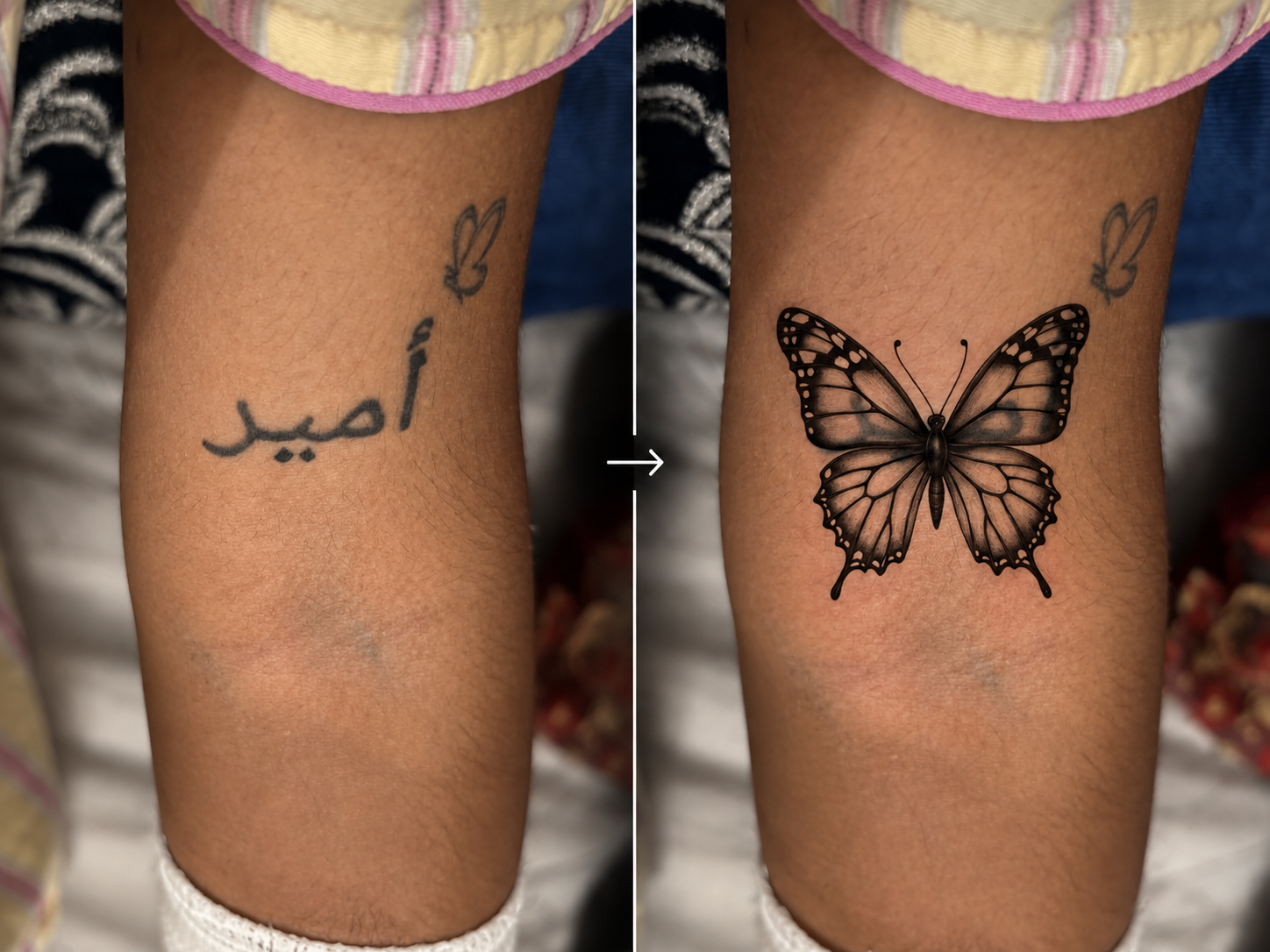
A fresh tattoo begins with clean skin. A cover-up begins with pigment that is already present beneath the surface. The artist must work with that pigment through contrast, denser values, overlapping forms, strategic shadows and carefully planned placement. The darkest parts of the new design often need to land where the original is darkest. This is why a cover-up is frequently larger or bolder than the tattoo you might choose for clean skin. It does not mean every cover-up must become a huge black design. Faded linework may allow for realism, botanical work, ornamental structure or other approaches, while dense black ink may demand stronger contrast and more coverage.
What Determines Whether Your Cover-Up Will Work
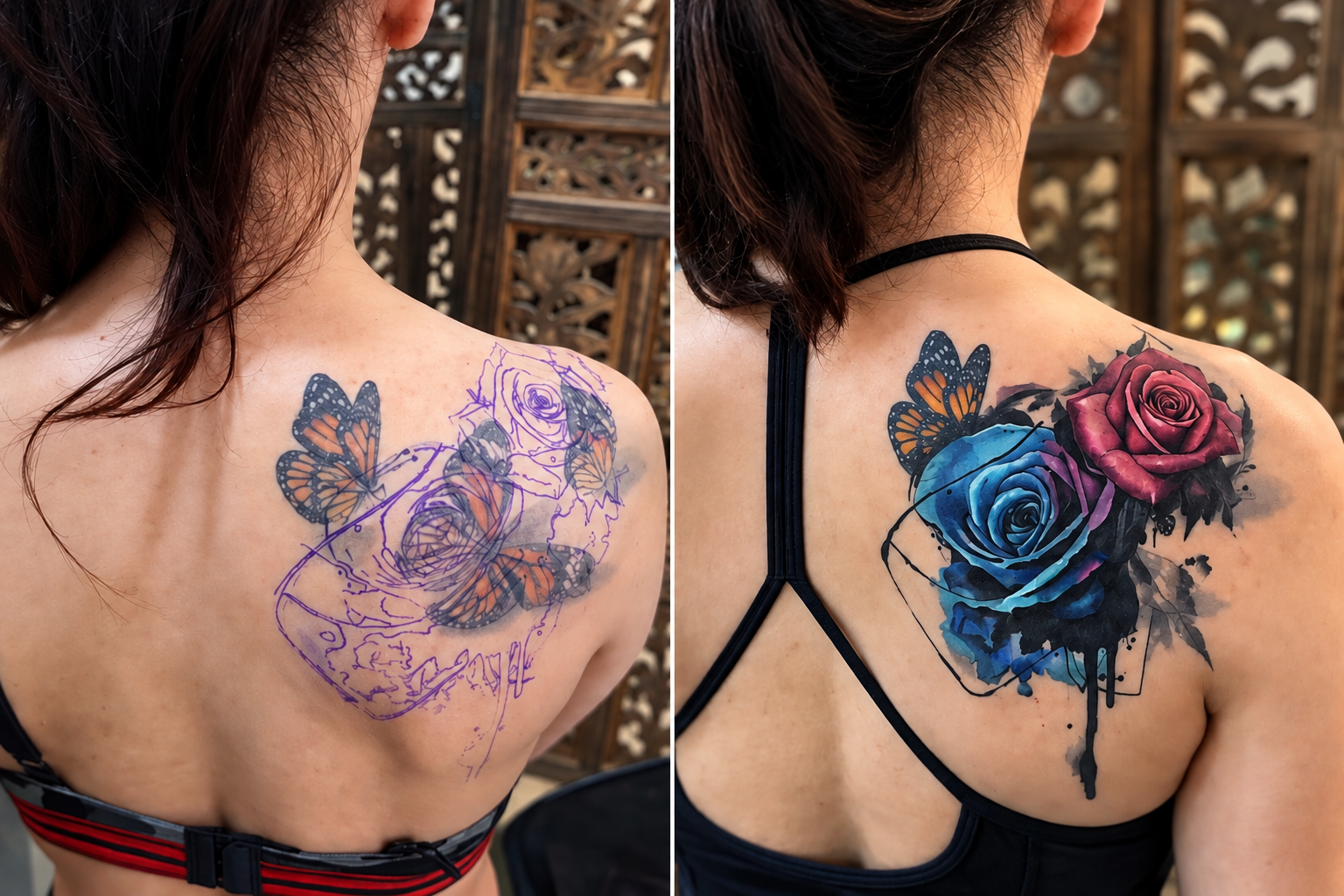
Darkness and saturation are major factors. Faded, thin-lined tattoos generally provide more options than solid black or heavily packed colour. Size also matters: the new composition usually needs room around the old tattoo so it does not look cramped. Placement influences the available space, body flow and practical healing considerations. Colour can affect which palette will conceal the original most effectively. Skin condition matters too, particularly where there is scarring, raised texture, blowouts or previous laser treatment. Photographs are useful for an initial conversation, but an in-person assessment can reveal details that a screen cannot.
Choosing a Design That Fits Who You Are Now
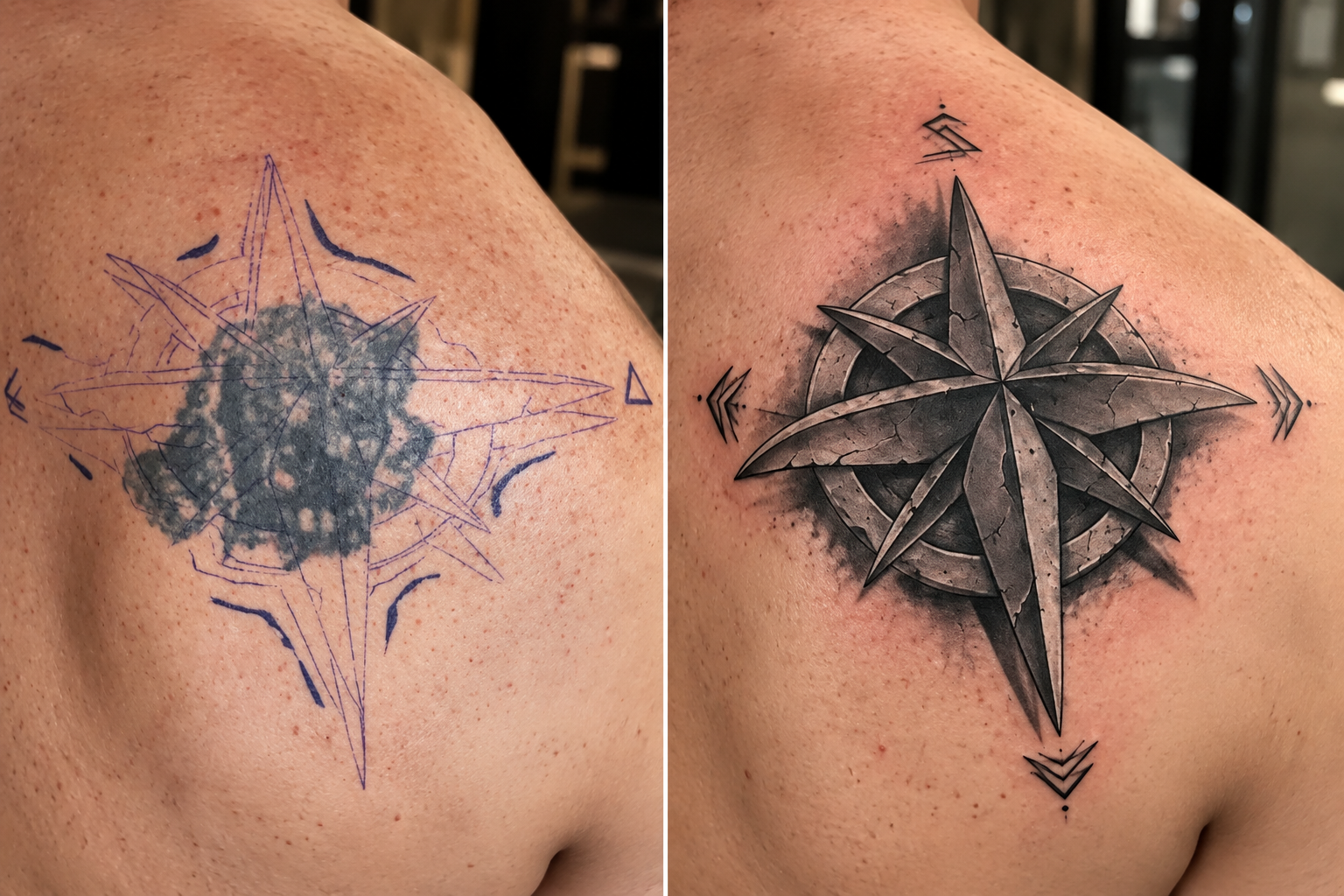
The strongest cover-up is not selected only because it hides the old tattoo. It should also feel right for the person wearing it today. Consider the mood, style and scale you genuinely want, then allow the artist to adapt those preferences to the existing ink and body area. Bring references, but do not expect one image to be copied unchanged. A professional artist may combine several ideas or recommend a different composition because the old tattoo dictates where the darkest elements must sit. Be honest about how much size and darkness you are willing to accept. That conversation prevents disappointment later.
What to Expect From a Professional Consultation
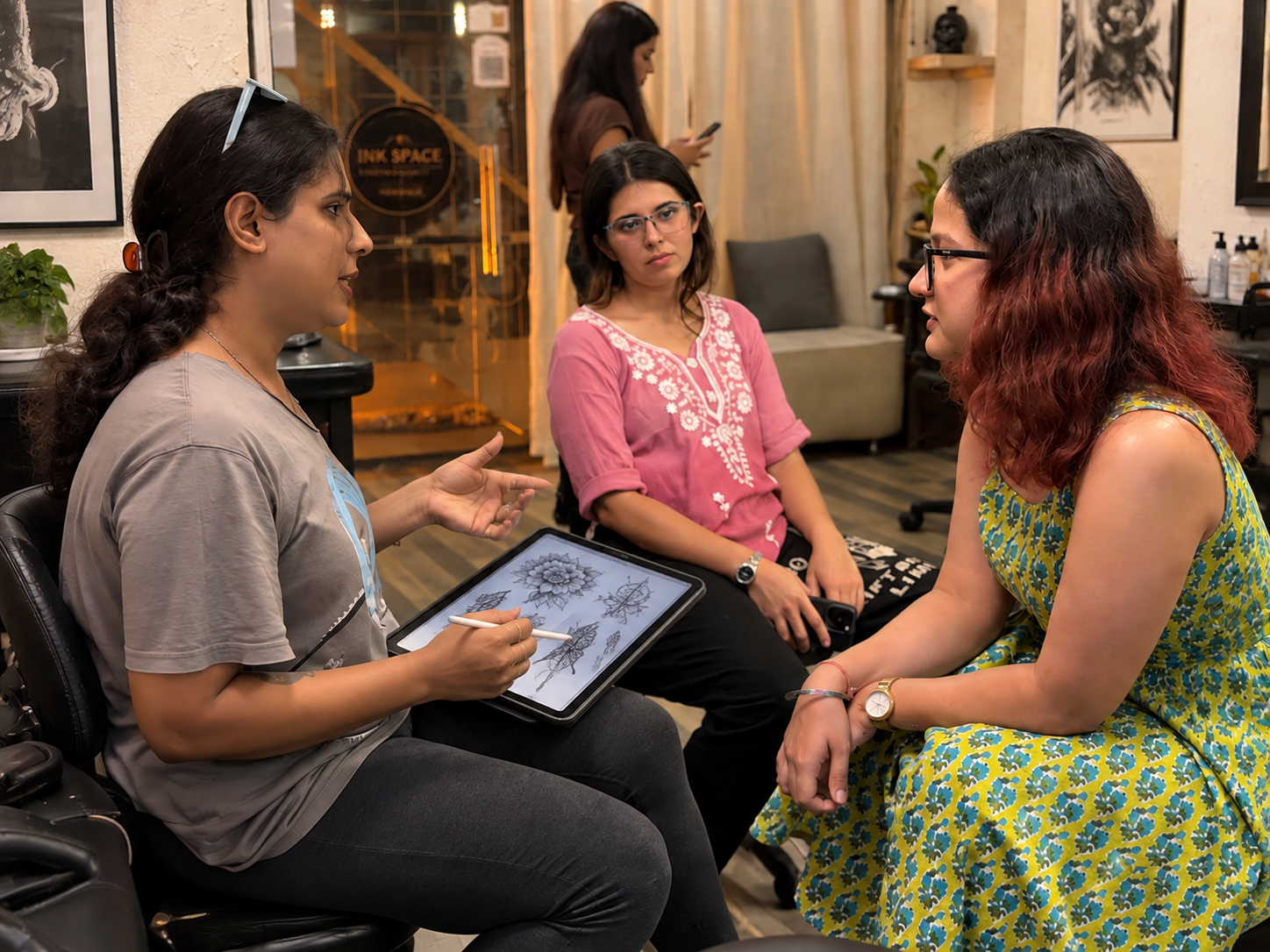
A useful consultation begins with listening. Explain why you want the change, what you want to avoid and what kind of tattoo you would be happy to live with long-term. The artist should assess the existing piece, including its size, saturation, colour, placement and skin condition. You should receive honest guidance about direct coverage, design compromises, reworking and possible lightening. At Inkspace in Hauz Khas, the consultation should be approached as a design assessment rather than a rushed transaction. The purpose is to understand what can realistically be created and which route protects the quality of the final result.
A New Tattoo Should Move the Story Forward
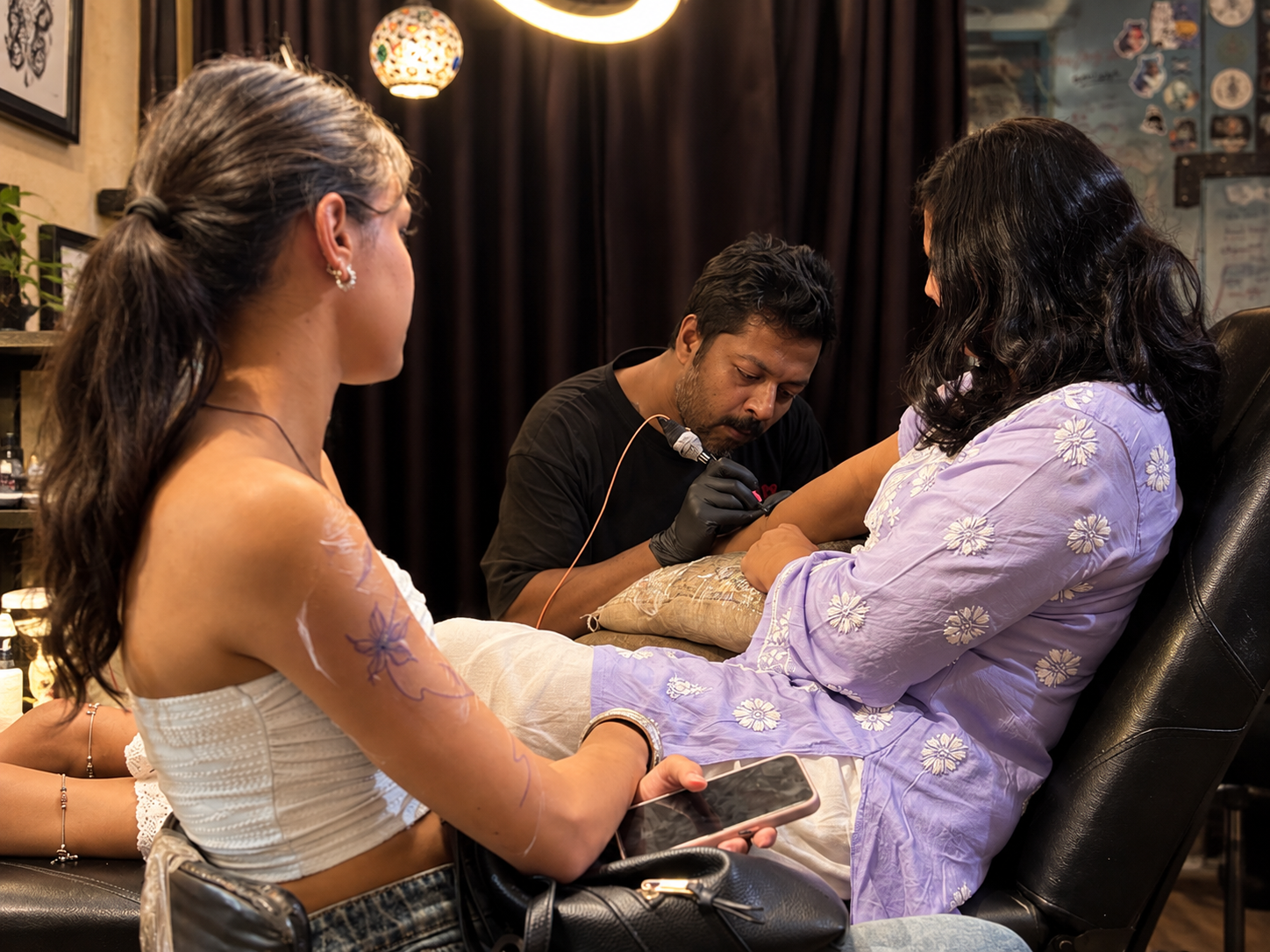
A cover-up does not have to pretend the old tattoo never existed. It can give the area a new visual identity. The best outcome is not always the most complicated or darkest design; it is the one that balances concealment, body flow, technical possibility and personal taste. If you are considering a cover-up at Inkspace, bring clear photographs, references and an honest explanation of what you want to change. The artist’s role is not to judge your past. It is to help you understand what can be created on your skin now.
Related reading
- Cover Up Tattoos in New Delhi: What You Need to Know
- Your Pinterest Tattoo Isn’t Designed for Your Body
- Can a Fine Line Tattoo Tell a Big Story? — The Story Behind the Ink
- Does a Tattoo Really Need to Have Meaning? Or Is Loving
Final Takeaway
You are allowed to change your mind about a tattoo without disowning the person you once were. A cover-up is most successful when it is treated as a new piece of body art—not a rushed attempt to bury an old decision. Give the existing ink an honest assessment, stay flexible about size and style, and choose a design that feels connected to the person you are becoming.
Artist Advice
The strongest cover-ups begin with honesty. An artist should assess the existing tattoo before making promises. If the original is too dark, too large or too saturated for the requested concept, explain the limitation and offer practical alternatives such as a bolder composition, a rework or medically supervised laser lightening. A technically covered tattoo is not automatically a successful tattoo; the new piece should also have good flow, readable contrast and a design that will continue to make sense after healing.
Frequently Asked Questions
Can every tattoo be covered up?
No. Many tattoos can be redesigned, but dense blackwork, heavily saturated colour, large pieces and restrictive placements may require a larger design, reworking or laser lightening first.
Does a cover-up have to be bigger than the original?
Often, yes. Extra space lets the artist contain the original and place darker elements where they are needed. The exact size depends on the old tattoo and the new concept.
Do I need laser before a cover-up?
Not always. Faded tattoos may be covered directly, while dense pieces can benefit from laser lightening. Laser is a medical procedure and the skin must heal before tattooing again.
How should I choose a cover-up design?
Start with styles and visual qualities you like, then let the artist adapt them to the existing tattoo, your anatomy, desired size and budget. The best design balances preference with feasibility.